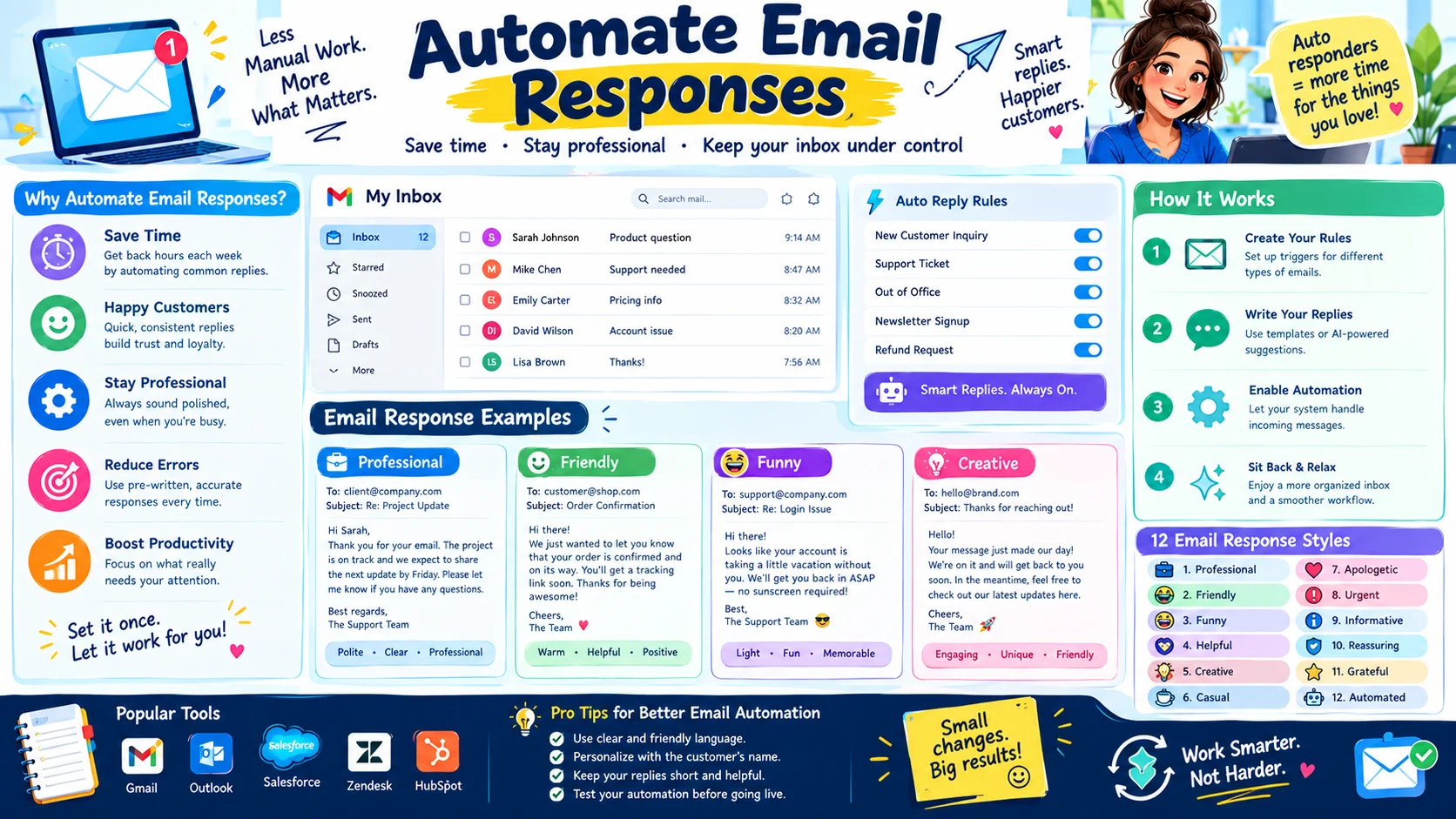
Automating email responses means using ready-made messages, templates, or rules to reply faster while keeping communication clear and natural. The best responses save time without making your emails feel cold or copy-pasted.
Top alternatives: automated email replies, email response templates, automatic email responses, email autoresponders, smart email replies
A good email response can save you from staring at a blank screen wondering, “How do I say this without sounding weird?” Whether you are answering customers, coworkers, friends, clients, or endless inbox notifications, the right wording makes communication smoother. Automating email responses can help you handle routine messages quickly while still sounding like an actual human. Think work emails, customer questions, appointment requests, follow-ups, DMs that moved into your inbox, and those messages that somehow require a five-paragraph answer for a two-line question. The trick is choosing wording that matches the situation. A professional response should feel polished, while a casual reply can have personality. A funny response can lighten the mood, while a confident one can save time and set boundaries. Below, you will find practical email response ideas organized by tone, personality, and situation.
Funny Automating Email Responses
1. Your email has officially entered the reply queue.
Use this when you want to make a routine automated response feel playful.
Meaning: It humorously tells the sender that their message has been received and is being processed.
2. Thanks for emailing me before my coffee kicked in.
Use this for casual workplace communication with someone who appreciates humor.
Meaning: It adds a lighthearted excuse for a delayed or brief response.
3. Your message landed safely in my inbox.
Use this as a playful acknowledgment for a routine message.
Meaning: It confirms receipt without sounding overly formal.
4. Inbox received, brain loading.
Use this when you need more time before giving a complete answer.
Meaning: It says you have seen the message but are not ready with a full response yet.
5. Your email has been seen by the inbox gods.
Use this with friends or familiar coworkers who enjoy internet-style humor.
Meaning: It playfully confirms that the email was noticed.
6. Thanks for the message. My inbox and I appreciate you.
Use this for a friendly acknowledgment that does not require much detail.
Meaning: It makes a basic receipt message warmer and more entertaining.
7. Reply pending while I pretend to have my life together.
Use this with close colleagues or friends when a response will take time.
Meaning: It humorously admits that you need extra time to respond.
8. This email has been added to today’s tiny mountain of tasks.
Use this when acknowledging a busy inbox without sounding negative.
Meaning: It signals that the request has been noticed and will be handled later.
9. Message received. Panic level remains manageable.
Use this when you want a funny but reassuring acknowledgment.
Meaning: It confirms receipt while keeping the mood relaxed.
10. Your email is officially on my radar.
Use this when you want a casual acknowledgment.
Meaning: It tells the sender that you have noticed their message.
11. Inbox says yes. The calendar says maybe.
Use this when responding to a scheduling-related request.
Meaning: It humorously communicates that availability still needs to be checked.
12. Thanks for reaching out. The reply machine is warming up.
Use this for a playful automated-style acknowledgment.
Meaning: It says a response is coming while keeping the message friendly.
Professional Automating Email Responses
1. Thank you for your email. I have received your message and will respond shortly.
Use this when acknowledging a client or business inquiry.
Meaning: It confirms receipt and sets a professional expectation for a response.
2. Thank you for reaching out. Your request has been received.
Use this for customer service or general business communication.
Meaning: It provides a clear and courteous acknowledgment.
3. I appreciate your message and will review the details carefully.
Use this when a request requires thoughtful consideration.
Meaning: It communicates attention and professionalism.
4. Thank you for contacting us. We are reviewing your inquiry now.
Use this for customer support communications.
Meaning: It reassures the sender that their request is being handled.
5. Your message has been received. We will follow up as soon as possible.
Use this when the exact response time is uncertain.
Meaning: It acknowledges the email without promising a specific deadline.
6. Thank you for your patience while we review your request.
Use this when a response may take longer than expected.
Meaning: It politely acknowledges the delay.
7. I have received your email and will provide an update once I have more information.
Use this when additional information is required before answering.
Meaning: It explains why a complete response is not available yet.
8. Thank you for bringing this to our attention.
Use this when someone reports an issue or concern.
Meaning: It acknowledges the importance of the sender’s message.
9. We appreciate you getting in touch with us.
Use this for professional customer or business communication.
Meaning: It creates a courteous and welcoming tone.
10. Your inquiry is currently being reviewed by our team.
Use this for structured customer support workflows.
Meaning: It communicates that the request has moved into a review stage.
11. Thank you for the information. We will take the next appropriate steps.
Use this after receiving documents, details, or instructions.
Meaning: It confirms receipt and indicates forward movement.
12. We have received your message and appreciate the opportunity to assist.
Use this for polished customer-facing communication.
Meaning: It combines acknowledgment with a helpful service-oriented tone.
Polite Automating Email Responses
1. Thank you for getting in touch. I appreciate your message.
Use this when you want a warm and respectful acknowledgment.
Meaning: It shows appreciation without becoming overly formal.
2. Thank you for reaching out. I will get back to you soon.
Use this when you need time before providing a complete answer.
Meaning: It politely sets an expectation for a follow-up.
3. I appreciate you taking the time to contact me.
Use this for professional or semi-formal correspondence.
Meaning: It recognizes the sender’s effort.
4. Thank you for your patience and understanding.
Use this when your response is delayed.
Meaning: It politely acknowledges the sender’s patience.
5. Thank you for sharing those details.
Use this after someone provides useful information.
Meaning: It confirms that their information was received and valued.
6. I appreciate the update.
Use this for short professional exchanges.
Meaning: It acknowledges new information clearly and politely.
7. Thank you for following up with me.
Use this when someone sends a reminder.
Meaning: It recognizes their follow-up without sounding defensive.
8. I will review this and get back to you.
Use this when you need time to consider a request.
Meaning: It politely communicates that a later response will follow.
9. Thank you for your understanding.
Use this when explaining a delay, limitation, or boundary.
Meaning: It keeps the message respectful and calm.
10. I appreciate your patience while I look into this.
Use this when investigating an issue.
Meaning: It reassures the sender that their concern is being addressed.
11. Thanks for bringing this to my attention.
Use this when someone points out an issue or important detail.
Meaning: It acknowledges their contribution positively.
12. I hope this helps, and please feel free to reach out if you have any questions.
Use this at the end of a helpful response.
Meaning: It keeps the communication open and welcoming.
Creative Automating Email Responses
1. Your message has arrived safely in my digital mailbox.
Use this when you want a traditional acknowledgment with a playful twist.
Meaning: It confirms receipt in a more memorable way.
2. Consider this your official inbox confirmation.
Use this when sending a simple acknowledgment.
Meaning: It gives a routine response a slightly more polished personality.
3. Your email has made it through the inbox maze.
Use this for informal business communication.
Meaning: It humorously confirms that the message was received.
4. Message received and added to the action list.
Use this when the email requires follow-up.
Meaning: It signals that the request has been noted for action.
5. Your note is officially on my digital desk.
Use this for friendly professional communication.
Meaning: It confirms that the message has been noticed.
6. Email received, details noted, next steps loading.
Use this when you need to process information before responding.
Meaning: It communicates progress in a modern, playful style.
7. Your message has joined the inbox lineup.
Use this for a casual acknowledgment during a busy period.
Meaning: It explains that the request is waiting among other tasks.
8. Your email has successfully entered my world.
Use this with friends or familiar contacts.
Meaning: It provides a humorous confirmation of receipt.
9. The inbox has spoken, and your message has been received.
Use this for a slightly dramatic but friendly acknowledgment.
Meaning: It confirms receipt with personality.
10. Consider your message officially checked in.
Use this for simple confirmations.
Meaning: It tells the sender that their email has been noticed.
11. Your request is now on the digital clipboard.
Use this when a message needs future action.
Meaning: It communicates that the request has been recorded.
12. Message received, mission accepted.
Use this when someone sends you a clear task or request.
Meaning: It confirms that you understand and intend to handle it.
Sarcastic Automating Email Responses
1. Yes, the inbox has once again chosen me.
Use this with coworkers or friends who understand your humor.
Meaning: It jokingly expresses resignation about another email.
2. Your email survived the inbox chaos and reached me.
Use this during a particularly busy email day.
Meaning: It humorously acknowledges the crowded inbox.
3. Another email, another opportunity to practice patience.
Use this with close colleagues when the situation is clearly lighthearted.
Meaning: It playfully comments on receiving another request.
4. Fantastic, my inbox definitely needed more excitement.
Use this when a familiar sender sends a minor request.
Meaning: It uses irony to make a routine message funny.
5. Adding this to the growing collection of things I need to answer.
Use this when acknowledging a non-urgent request.
Meaning: It admits that the message has joined your workload.
6. Received, because apparently the inbox never sleeps.
Use this for casual workplace humor.
Meaning: It jokes about the constant flow of email.
7. Wonderful timing, my inbox was almost getting lonely.
Use this when a friend or coworker emails unexpectedly.
Meaning: It humorously welcomes another message.
8. Your message has arrived at precisely the moment my inbox needed it least.
Use this only with people who appreciate dry humor.
Meaning: It jokingly complains while still confirming receipt.
9. Noted, because ignoring emails apparently has consequences.
Use this for a playful acknowledgment.
Meaning: It humorously says the message has been recorded.
10. Email received. Productivity officially interrupted.
Use this with coworkers or friends.
Meaning: It jokes that the email has distracted you from another task.
11. Adding this to my extremely glamorous email workload.
Use this when the request is routine and the relationship is informal.
Meaning: It makes fun of ordinary inbox responsibilities.
12. Your message has been received with the appropriate amount of inbox drama.
Use this when you want playful sarcasm without being rude.
Meaning: It confirms receipt while keeping the mood light.
Cute Automating Email Responses
1. Thanks for popping into my inbox.
Use this for a friendly message from someone you know.
Meaning: It makes a simple acknowledgment feel warm and personal.
2. Your message made it safely to me.
Use this when reassuring someone that their email arrived.
Meaning: It communicates receipt in a gentle way.
3. Thanks for checking in. I appreciate it.
Use this when someone follows up thoughtfully.
Meaning: It shows gratitude for their effort.
4. Your email brightened my inbox a little.
Use this when receiving a pleasant or encouraging message.
Meaning: It tells the sender that their message had a positive effect.
5. Happy to hear from you.
Use this for friendly personal or professional communication.
Meaning: It expresses genuine warmth.
6. Thanks for sending this my way.
Use this after receiving useful information.
Meaning: It shows appreciation for the sender’s effort.
7. Inbox hug received.
Use this with close friends or playful contacts.
Meaning: It turns a warm message into a cute digital response.
8. Thanks for the little inbox surprise.
Use this when an email arrives unexpectedly.
Meaning: It presents the unexpected message positively.
9. Your message is safely tucked into my inbox.
Use this for a gentle acknowledgment.
Meaning: It reassures the sender that their message was received.
10. Thanks for thinking of me.
Use this when someone reaches out personally.
Meaning: It communicates appreciation and warmth.
11. Message received with a smile.
Use this after receiving something kind or encouraging.
Meaning: It shows that the email was positively received.
12. Thanks for making my inbox a little nicer today.
Use this after a friendly or thoughtful email.
Meaning: It expresses sincere appreciation in a cheerful way.
Chill And Casual Automating Email Responses
1. Got it, thanks!
Use this for quick everyday email communication.
Meaning: It confirms that you understood the message.
2. Sounds good to me.
Use this when agreeing to a simple plan or request.
Meaning: It communicates casual approval.
3. Yep, received!
Use this when someone only needs confirmation.
Meaning: It gives a fast and friendly receipt acknowledgment.
4. Thanks, I’ll take a look.
Use this when someone sends information that you need to review.
Meaning: It says you received the material and will check it.
5. Got your email. I’ll circle back soon.
Use this when a detailed answer will come later.
Meaning: It confirms receipt and promises a follow-up.
6. All good, thanks for the update.
Use this when someone provides routine information.
Meaning: It acknowledges the update without unnecessary detail.
7. Perfect, thanks!
Use this when everything is clear and acceptable.
Meaning: It shows quick approval and appreciation.
8. Yep, that works for me.
Use this when agreeing to a suggestion or schedule.
Meaning: It communicates straightforward agreement.
9. Thanks for sending this over.
Use this after receiving a file, link, or document.
Meaning: It acknowledges the item and thanks the sender.
10. Got it on my end.
Use this when confirming receipt.
Meaning: It reassures the sender that the message or file arrived.
11. I’ll check it out and get back to you.
Use this when you need time to review something.
Meaning: It keeps the tone relaxed while promising a follow-up.
12. Sounds good, I’m on it.
Use this after receiving a task or request.
Meaning: It communicates that you understand and are taking action.
Confident Automating Email Responses
1. Thanks for reaching out. I’ll take care of this.
Use this when you want to sound capable and direct.
Meaning: It communicates ownership of the task.
2. Received. I’ll handle the next steps.
Use this when responsibility has been clearly assigned.
Meaning: It confirms receipt and demonstrates initiative.
3. I’ve got this from here.
Use this when you want to reassure someone that no further action is needed from them.
Meaning: It communicates confidence and ownership.
4. Thanks for the details. I know what needs to happen next.
Use this after receiving a clear request.
Meaning: It shows understanding and readiness to act.
5. Consider it noted and underway.
Use this when work has already started.
Meaning: It confirms that the request is both understood and being handled.
6. I’ll review everything and follow up with a clear update.
Use this when the sender expects a detailed answer.
Meaning: It promises an organized follow-up.
7. Understood. I’ll take it from here.
Use this when you want a concise professional acknowledgment.
Meaning: It communicates control and responsibility.
8. Thanks, I’ll make sure this is addressed.
Use this when responding to an issue or concern.
Meaning: It reassures the sender that the matter will receive attention.
9. I’ve received the request and will move forward accordingly.
Use this in formal workplace communication.
Meaning: It confirms understanding and planned action.
10. I’ll review the information and respond with the next steps.
Use this when a decision or detailed response is required.
Meaning: It creates a clear expectation for your follow-up.
11. Noted. I’ll keep you updated as things progress.
Use this when ongoing communication may be needed.
Meaning: It communicates responsibility and transparency.
12. Thanks for flagging this. I’ll take it from here.
Use this when someone brings an issue to your attention.
Meaning: It acknowledges the concern and signals ownership.
Emotional And Warm Automating Email Responses
1. Thank you for reaching out. It genuinely means a lot.
Use this when someone sends a thoughtful personal message.
Meaning: It expresses sincere appreciation.
2. I really appreciate you taking the time to write.
Use this when someone sends a meaningful or detailed email.
Meaning: It recognizes the effort behind their message.
3. Your message came at a meaningful time. Thank you.
Use this when an email provides timely encouragement.
Meaning: It shows that the message had emotional significance.
4. Thank you for thinking of me.
Use this when someone reaches out with care or support.
Meaning: It communicates gratitude and warmth.
5. I’m grateful you took the time to share this with me.
Use this when someone offers personal information or encouragement.
Meaning: It shows respect and appreciation.
6. I really needed to hear that. Thank you.
Use this after receiving comforting or encouraging words.
Meaning: It communicates that the message had a meaningful emotional impact.
7. I appreciate your kindness more than you know.
Use this when someone has gone out of their way to help.
Meaning: It expresses deep gratitude.
8. Thank you for being so thoughtful.
Use this after receiving a considerate message.
Meaning: It recognizes the sender’s kindness.
9. Your message made a difference today.
Use this when someone’s email genuinely helps you.
Meaning: It tells the sender that their words mattered.
10. I’m glad you reached out.
Use this when someone sends a personal or supportive message.
Meaning: It communicates warmth and openness.
11. Thank you for sharing this with me. I truly appreciate it.
Use this when someone trusts you with important information.
Meaning: It acknowledges their openness respectfully.
12. Sending my thanks right back your way.
Use this for a warm and friendly response to kindness.
Meaning: It returns appreciation in a relaxed way.
Sweet Automating Email Responses
1. Thanks so much for reaching out.
Use this when you want a warmer alternative to a standard acknowledgment.
Meaning: It communicates genuine appreciation.
2. I appreciate you checking in.
Use this when someone thoughtfully follows up.
Meaning: It recognizes their care and effort.
3. Thanks for making time to send this.
Use this when someone has written a thoughtful message.
Meaning: It shows appreciation for their effort.
4. It was lovely to hear from you.
Use this for personal or friendly professional communication.
Meaning: It conveys warmth and positive feelings.
5. Thank you for the thoughtful note.
Use this after receiving a kind or meaningful email.
Meaning: It directly acknowledges the thought behind the message.
6. I’m smiling after reading this. Thank you.
Use this when an email genuinely makes you happy.
Meaning: It communicates a cheerful emotional reaction.
7. This was such a nice message to receive.
Use this after receiving encouragement or kindness.
Meaning: It lets the sender know their message was appreciated.
8. Thanks for bringing some positivity into my inbox.
Use this after receiving an uplifting email.
Meaning: It playfully expresses gratitude for a positive message.
9. I’m really glad you sent this.
Use this when an email arrives at the right moment.
Meaning: It communicates sincere appreciation.
10. Thanks for thinking of me. That was really kind.
Use this when someone remembers or supports you.
Meaning: It combines gratitude with personal warmth.
11. Your message was a lovely little inbox moment.
Use this for a playful response to a sweet email.
Meaning: It describes the message as a pleasant surprise.
12. Sending a big thank-you your way.
Use this when you want to sound enthusiastic and warm.
Meaning: It communicates strong appreciation without sounding formal.
Clever Automating Email Responses
1. Message received, context understood.
Use this when you want a concise but polished acknowledgment.
Meaning: It confirms both receipt and understanding.
2. Consider this email officially on my list.
Use this when a request requires future action.
Meaning: It reassures the sender that the request has been recorded.
3. Inbox status: received and noted.
Use this for a short professional acknowledgment.
Meaning: It communicates receipt and awareness.
4. I’ve got the information I need. Thanks.
Use this after someone provides the necessary details.
Meaning: It confirms that no additional information is currently required.
5. The details are clear. I’ll handle the next step.
Use this after receiving complete instructions.
Meaning: It demonstrates understanding and initiative.
6. Consider your request officially logged.
Use this for a concise business response.
Meaning: It confirms that the request has been recorded.
7. Received, reviewed, and ready for the next step.
Use this when you have already checked the information.
Meaning: It communicates progress clearly.
8. I’ve captured the key details.
Use this after receiving a detailed email.
Meaning: It reassures the sender that important information was understood.
9. Thanks, that gives me exactly what I needed.
Use this when the sender provides missing information.
Meaning: It confirms that their contribution solved the immediate issue.
10. Your request is officially on the action list.
Use this when you need to complete a task later.
Meaning: It communicates that the request has been recorded for action.
11. Clear, noted, and moving forward.
Use this for a concise acknowledgment after receiving instructions.
Meaning: It signals understanding and progress.
12. Information received. Next step unlocked.
Use this for a modern, playful professional message.
Meaning: It says the provided information allows you to continue.
Short And Efficient Automating Email Responses
1. Received, thanks!
Use this when the sender only needs confirmation.
Meaning: It confirms receipt quickly.
2. Got it.
Use this for very casual communication.
Meaning: It communicates simple understanding.
3. Note, thank you.
Use this for concise professional communication.
Meaning: It confirms that the information has been recorded.
4. Thanks, received.
Use this when acknowledging a document or message.
Meaning: It confirms successful delivery.
5. Understood.
Use this when instructions are clear.
Meaning: It communicates that you understand what was said.
6. Will do. Thanks!
Use this after receiving a straightforward task.
Meaning: It confirms that you intend to complete it.
7. Thanks for the update.
Use this after someone provides new information.
Meaning: It acknowledges the update politely.
8. On it.
Use this for informal work communication.
Meaning: It indicates that you are taking action.
9. Sounds good.
Use this when agreeing with a suggestion.
Meaning: It communicates casual approval.
10. Confirmed.
Use this when a direct confirmation is needed.
Meaning: It clearly verifies the information.
11. Thanks, I’ll review.
Use this when someone sends material that needs attention.
Meaning: It confirms receipt and signals that you will examine it.
12. All set, thank you.
Use this when everything is complete.
Meaning: It confirms that no further action is needed.
Customer Service Automating Email Responses
1. Thank you for contacting our support team.
Use this as the opening of a customer support acknowledgment.
Meaning: It welcomes the customer and confirms contact.
2. We have received your request and are reviewing it now.
Use this after a customer submits a support inquiry.
Meaning: It reassures the customer that their request is being processed.
3. Thank you for bringing this issue to our attention.
Use this when a customer reports a problem.
Meaning: It acknowledges the concern respectfully.
4. We appreciate your patience while we investigate this matter.
Use this when troubleshooting may take time.
Meaning: It politely explains the need for additional time.
5. Your request has been assigned for review.
Use this when a support workflow has moved the inquiry forward.
Meaning: It communicates that someone is responsible for the request.
6. We are looking into the details and will update you as soon as possible.
Use this when the issue requires investigation.
Meaning: It sets a realistic expectation for follow-up.
7. Thank you for providing those details.
Use this after a customer sends additional information.
Meaning: It confirms that the information is useful.
8. We understand your concern and are working toward a solution.
Use this when a customer is frustrated.
Meaning: It acknowledges their concern while emphasizing action.
9. Your message has been received successfully.
Use this for automated support confirmations.
Meaning: It confirms that the customer’s message arrived.
10. We will review your request and respond with the appropriate next steps.
Use this when the answer depends on further review.
Meaning: It explains what the customer can expect next.
11. Thank you for giving us the opportunity to assist.
Use this in polished customer service communication.
Meaning: It maintains a helpful and respectful tone.
12. We appreciate your patience and look forward to helping you resolve this.
Use this when a support issue is still being handled.
Meaning: It combines reassurance, patience, and a service-focused tone.
Friendly Workplace Automating Email Responses
1. Thanks for the heads-up!
Use this when a coworker gives you useful information.
Meaning: It casually acknowledges the update.
2. Got it, thanks for keeping me posted.
Use this during ongoing team communication.
Meaning: It confirms understanding and appreciation.
3. Thanks, I’ll take a look when I get a minute.
Use this when you are busy but want to acknowledge the email.
Meaning: It says you will review the message later.
4. Perfect, that works for me.
Use this when agreeing to a workplace plan.
Meaning: It communicates clear approval.
5. Thanks for sending this over. I’ll review it today.
Use this after receiving a document or report.
Meaning: It confirms receipt and provides a response timeframe.
6. Appreciate the update!
Use this for quick internal communication.
Meaning: It expresses simple appreciation.
7. Yep, I’m on it.
Use this after receiving an assigned task.
Meaning: It shows that you are taking action.
8. Thanks, I’ll keep that in mind.
Use this after receiving advice or information.
Meaning: It acknowledges the information without overexplaining.
9. Gotcha, thanks!
Use this with coworkers in an informal workplace.
Meaning: It confirms understanding in a relaxed way.
10. Thanks for flagging this.
Use this when someone points out an issue.
Meaning: It acknowledges their helpfulness.
11. Sounds good. I’ll keep you updated.
Use this when a task will require follow-up.
Meaning: It communicates agreement and future communication.
12. All clear on my end. Thanks!
Use this when instructions or details are understood.
Meaning: It confirms there is no current confusion.
Flirty And Playful Automating Email Responses
1. Well, this was a nice email to find.
Use this when someone you like sends a personal message.
Meaning: It subtly shows that you enjoyed hearing from them.
2. Your email definitely got my attention.
Use this when you want to show interest without being too direct.
Meaning: It communicates attraction or curiosity.
3. I was going to reply later, but then I saw your name.
Use this when flirting with someone you already have chemistry with.
Meaning: It playfully suggests that their message is special.
4. Suddenly, my inbox has a favorite message.
Use this after receiving a charming email from someone you like.
Meaning: It gives the sender a playful compliment.
5. Okay, I admit this email made me smile.
Use this when their message genuinely makes you happy.
Meaning: It reveals positive feelings in a lighthearted way.
6. You know how to make an inbox interesting.
Use this when someone sends a playful or charming message.
Meaning: It compliments their ability to capture your attention.
7. I definitely did not expect to enjoy checking my email this much.
Use this when flirting through a casual email exchange.
Meaning: It playfully hints that the sender makes email more enjoyable.
8. Your timing is suspiciously perfect.
Use this when someone messages at a convenient or exciting moment.
Meaning: It suggests playful interest.
9. I think your email just improved my afternoon.
Use this after receiving a sweet or flirty message.
Meaning: It communicates that hearing from them had a positive effect.
10. I could get used to emails from you.
Use this when you want to encourage more messages.
Meaning: It signals that you enjoy their attention.
11. Not going to lie, I was hoping you’d email.
Use this when you want to be more direct about your interest.
Meaning: It communicates genuine anticipation.
12. Looks like my inbox finally has good taste.
Use this when playfully complimenting the sender.
Meaning: It humorously suggests that their message stands out from the rest.
FAQs
What does automating email responses mean? Automating email responses means setting up messages, templates, rules, or systems that can send or prepare replies to common emails with less manual work.
What is a good automated email response? A good automated response is short, clear, helpful, and appropriate for the situation. It should confirm receipt and explain what happens next when needed.
Can automated email responses sound friendly? Yes. Simple wording, warm phrases, and a natural tone can make automated responses feel much less robotic.
Can automating email responses be used professionally? Absolutely. Businesses commonly use automated responses for customer inquiries, support requests, confirmations, scheduling, and out-of-office messages.
What if I do not actually mean the message? Keep the response neutral and honest. Instead of using overly enthusiastic language, choose simple wording such as “Thank you for your message. I’ll review this and follow up.”
Is humor appropriate in automated email responses? Humor works best with friends, familiar coworkers, and audiences who understand your personality. For customers, clients, formal workplaces, and sensitive situations, keep the wording professional and respectful.
How can I make an automated email response sound human? Use natural wording, avoid unnecessary corporate phrases, keep sentences short, and match the tone of the person receiving the message.
What should an automated email response include? Depending on the situation, include confirmation that the message was received, expected response timing, useful next steps, and another contact option when appropriate.
Can automated responses be short? Yes. For simple confirmations, “Received, thank you” or “Thanks for reaching out. I’ll review this shortly” may be enough.
What is the difference between an automated response and a template? An automated response can be triggered automatically by a rule or event, while a template is usually a reusable message that a person selects and sends manually.
Why does wording matter when automating email responses? The wording shapes how professional, friendly, helpful, or distant your communication feels, especially when the recipient cannot see the effort behind the response.
What is the best tone for automated email responses? The best tone depends on the audience and situation. Professional communication usually needs clarity and courtesy, while personal communication can be warmer, funnier, or more casual.
Conclusion
Automating email responses does not have to mean sending dull messages that sound like they were copied from a corporate handbook. The best replies are clear, useful, and matched to the person receiving them. Whether you need a professional acknowledgement, a friendly workplace reply, a funny response, or a quick confirmation, the right wording can make everyday communication much easier. Try different tones and keep the phrases that sound most like you. A great response can save time while still leaving a positive impression. Save this list for your next inbox marathon, share it with someone who always overthinks emails, and keep a few favorites ready for your next reply.