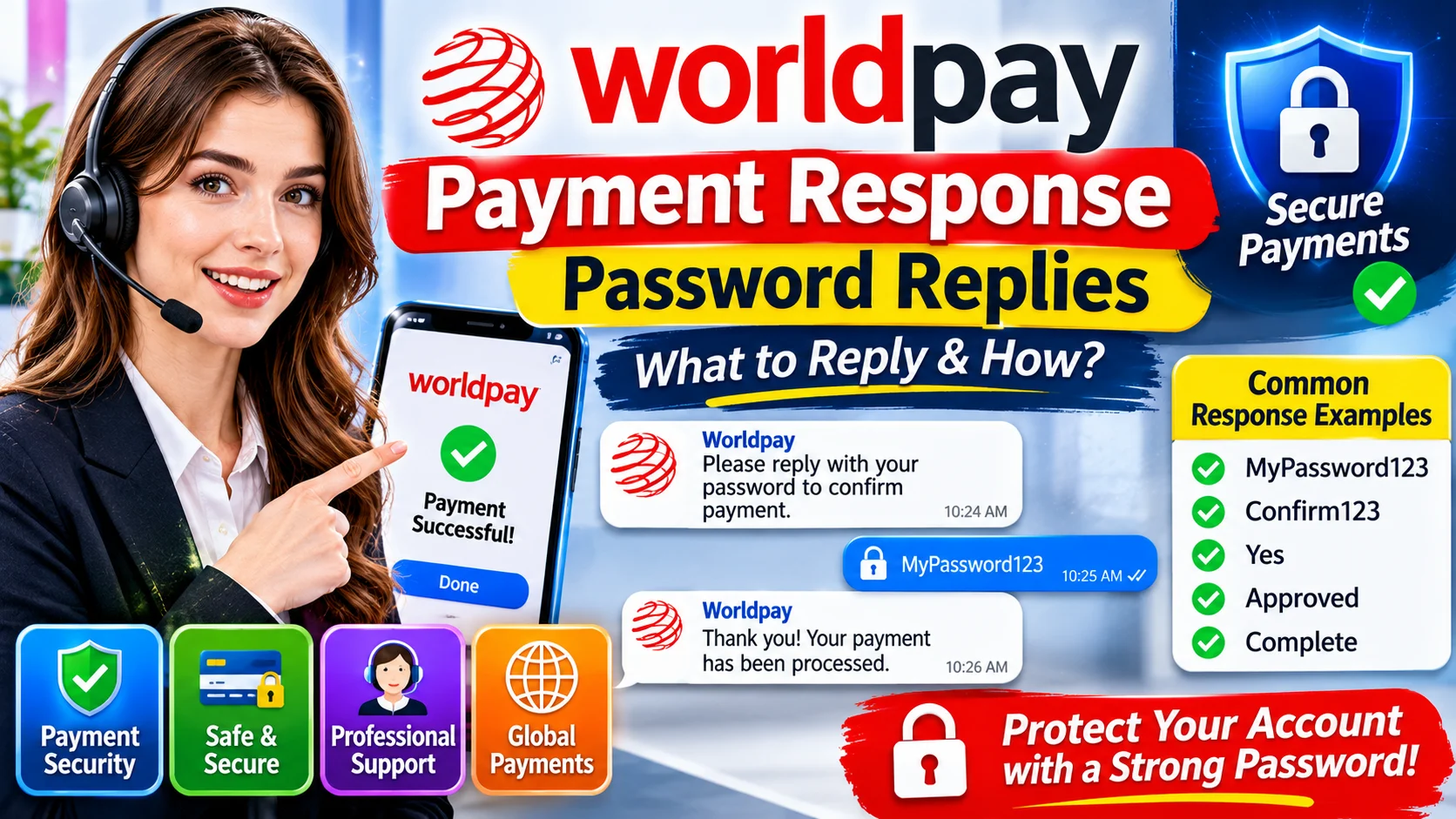
Worldpay payment response password refers to a secret value used in certain Worldpay integrations to validate payment notifications. If someone asks you for it, keep the response clear, professional, and security-conscious. WHMCS Documentation
Ever been asked for a worldpay payment response password and suddenly wondered, “Wait, am I supposed to send that?” You are definitely not alone. Payment gateway settings can sound like secret-agent vocabulary, especially when the request lands in an email, DM, support ticket, or work chat.
In certain Worldpay integrations, the payment response password is a configured secret used to validate payment notifications. It is not the kind of information you should casually paste into a message just because someone asks for it. WHMCS Documentation
That is where having the right reply helps. You can stay polite without oversharing, sound professional without sounding robotic, and keep the conversation moving without turning it into a security lecture. Whether you need a quick text, a support response, or a firm business reply, the options below give you ready-to-use wording for different situations.
Safe And Direct Responses
“I can’t share the payment response password here.”
Use this when someone directly requests the credential in a chat or message.
Meaning: You are setting a clear security boundary.
“I don’t share payment credentials through messages.”
Use this when the request arrives through email, DM, or an informal channel.
Meaning: You are protecting sensitive information without sounding hostile.
“Please use the approved secure channel for that information.”
Use this when your organization has an established method for handling credentials.
Meaning: You are redirecting the request to a safer process.
“I’ll verify the request before sharing any configuration details.”
Use this when you are unsure whether the requester is authorized.
Meaning: You want to confirm legitimacy first.
“That credential should remain confidential.”
Use this when you need a short and professional response.
Meaning: You are emphasizing confidentiality.
“I can help with the setup without sending the password here.”
Use this when you want to remain helpful while protecting the secret.
Meaning: You are offering assistance without exposing credentials.
“Let’s handle that through the secure support process.”
Use this when the request involves technical payment configuration.
Meaning: You prefer an approved support route.
“I’ll check the configuration instead of sending the credential.”
Use this when troubleshooting is the real goal.
Meaning: You are focusing on solving the problem safely.
“I’m not comfortable sharing that credential in chat.”
Use this when you want a personal but firm boundary.
Meaning: You are politely declining the insecure request.
“Please don’t send sensitive payment credentials here.”
Use this when someone has started sharing confidential information.
Meaning: You are stopping the risky exchange.
“I can confirm the setting without revealing the secret value.”
Use this during technical troubleshooting.
Meaning: You can help verify configuration while protecting the actual credential.
“For security, I’ll keep that value private.”
Use this when you need a simple response with no unnecessary explanation.
Meaning: You are prioritizing credential security.
Professional Responses
“For security reasons, I’m unable to provide the payment response password through this channel.”
Use this in a formal business email or support ticket.
Meaning: You are declining professionally while explaining why.
“Please submit the request through the appropriate authorized channel.”
Use this when someone needs access to configuration information.
Meaning: You are directing them toward the correct process.
“I can assist with verifying the configuration without disclosing the credential.”
Use this when a technical colleague needs troubleshooting help.
Meaning: You are offering useful assistance without revealing sensitive data.
“I’ll confirm the account configuration before taking any further action.”
Use this when authorization is unclear.
Meaning: You are choosing verification before disclosure.
“The credential should not be transmitted through an unsecured communication channel.”
Use this when explaining a security requirement to a colleague.
Meaning: You are highlighting secure handling.
“Please coordinate with the authorized account administrator for access.”
Use this when you are not responsible for credential management.
Meaning: You are sending the request to the correct person.
“I can confirm whether the setting is configured correctly.”
Use this when the requester does not actually need the password itself.
Meaning: You are offering a safer alternative.
“I’ll review the integration settings and confirm the relevant status.”
Use this when troubleshooting a payment gateway connection.
Meaning: You are focusing on the technical issue.
“I’m happy to help resolve the configuration issue through the proper process.”
Use this when you want to sound cooperative and professional.
Meaning: You are keeping the conversation solution-focused.
“Please avoid including credentials in support messages.”
Use this when responding to a support request containing sensitive details.
Meaning: You are reinforcing safe communication practices.
“I’ll escalate this through the appropriate technical channel.”
Use this when another team needs to investigate the issue.
Meaning: You are moving the problem to the right team.
“I can provide configuration guidance without exposing confidential values.”
Use this when someone asks for help setting up an integration.
Meaning: You can support the task while maintaining confidentiality.
Polite Responses
“Thanks for checking. I’d rather keep that credential private.”
Use this when you want to decline without sounding abrupt.
Meaning: You are being friendly while maintaining a boundary.
“I’m happy to help, but I can’t send that password here.”
Use this when you want to stay helpful during a technical conversation.
Meaning: You are refusing the request without refusing assistance.
“Could we handle that through a secure channel instead?”
Use this when the requester may be legitimate but the current channel is unsuitable.
Meaning: You are suggesting a safer alternative.
“I appreciate you reaching out. I’ll verify the request first.”
Use this when you need time to confirm authorization.
Meaning: You are responding warmly while protecting access.
“I can help confirm the setup without sharing the actual password.”
Use this when the person needs troubleshooting rather than the credential.
Meaning: You are offering a practical alternative.
“Let me check the correct process before we continue.”
Use this when you are unsure about the appropriate procedure.
Meaning: You want to avoid making an unsafe decision.
“I’d prefer not to send sensitive credentials by email.”
Use this when someone asks through email.
Meaning: You are politely steering the conversation toward safer handling.
“Please contact the authorized administrator for that information.”
Use this when you do not manage the account credentials.
Meaning: You are directing the requester to the proper contact.
“I can definitely help troubleshoot the issue.”
Use this when the password request is part of a larger technical problem.
Meaning: You are keeping the conversation productive.
“For security, I’ll keep that value confidential.”
Use this when you want a warm but concise response.
Meaning: You are protecting the credential without overexplaining.
“Thanks for understanding. I can verify the configuration another way.”
Use this when the requester accepts your security boundary.
Meaning: You are offering cooperation without disclosure.
“Let’s use the secure process so everything stays protected.”
Use this when you want the message to sound collaborative.
Meaning: You are making security a shared goal.
Friendly Responses
“Yep, I can help with the setup, but I’m keeping the password off chat.”
Use this with a familiar coworker who needs technical assistance.
Meaning: You are casual while still protecting the credential.
“I can check the setting for you without dropping the secret here.”
Use this when someone asks you to confirm configuration.
Meaning: You are offering help without revealing sensitive information.
“Let’s keep that little password secret, okay?”
Use this when the conversation is informal but the boundary still matters.
Meaning: You are making a security reminder feel friendly.
“I’ve got you. I just won’t send the credential in this chat.”
Use this when someone needs reassurance that you will help.
Meaning: You are separating helpfulness from credential sharing.
“Happy to help, just not by posting the password here.”
Use this in a relaxed work chat.
Meaning: You are keeping things friendly and secure.
“We can sort this out without exposing the password.”
Use this when troubleshooting is the main concern.
Meaning: You are focusing on the solution.
“Let’s keep the secret stuff in the secure lane.”
Use this with a casual technical team.
Meaning: You are using light language to reinforce security.
“I’ll check it and get back to you through the right channel.”
Use this when you need to verify the request first.
Meaning: You are postponing disclosure until the request is properly handled.
“No password sharing in the group chat today.”
Use this when someone casually asks for the credential publicly.
Meaning: You are creating a firm boundary with a little humor.
“I can confirm the setup without revealing the magic words.”
Use this when the group has a relaxed communication style.
Meaning: You are using humor while protecting the secret.
“Let’s troubleshoot the issue instead of trading passwords.”
Use this when someone is taking the shortcut of asking for credentials.
Meaning: You are redirecting attention toward the actual problem.
“I’ll help you get it working without putting the password on display.”
Use this when you want to sound reassuring.
Meaning: You are offering technical support safely.
Short And Casual Responses
“Can’t share that here.”
Use this when you need a quick reply in a busy chat.
Meaning: You are declining credential disclosure.
“Let’s keep that private.”
Use this when the request is informal.
Meaning: You are setting a simple security boundary.
“I’ll verify it securely.”
Use this when you want to keep the message extremely brief.
Meaning: You will check the information through a safer method.
“Not over chat.”
Use this when someone asks for the password in messaging.
Meaning: You are refusing the current communication method.
“I can verify the setting, though.”
Use this when you want to offer an alternative.
Meaning: You are willing to help without revealing the credential.
“That stays confidential.”
Use this when you want a firm but neutral answer.
Meaning: You are protecting sensitive information.
“Please use the secure channel.”
Use this when your organization has a designated process.
Meaning: You are redirecting the request.
“I’ll check with the admin.”
Use this when another person controls the credentials.
Meaning: You are escalating the request appropriately.
“I can help troubleshoot.”
Use this when the password request is related to an error.
Meaning: You are offering technical help instead.
“No credentials in chat.”
Use this when the request is made publicly.
Meaning: You are reinforcing a basic security boundary.
“I’ll handle that securely.”
Use this when you want to reassure the requester.
Meaning: You will deal with the credential appropriately.
“Let’s verify first.”
Use this when the requester’s authorization is uncertain.
Meaning: You want confirmation before proceeding.
Firm Responses
“I will not provide the payment response password through this channel.”
Use this when repeated requests are becoming uncomfortable.
Meaning: You are establishing a firm boundary.
“That credential is confidential and cannot be shared here.”
Use this when someone asks directly for the secret value.
Meaning: You are clearly refusing disclosure.
“Please do not request credentials through unsecured messages.”
Use this when the requester keeps using informal communication.
Meaning: You are correcting the communication method.
“I can assist with troubleshooting, but I will not disclose the password.”
Use this when someone tries to make the credential seem necessary.
Meaning: You are separating technical support from credential sharing.
“Access must be handled through the authorized administrator.”
Use this when account permissions are involved.
Meaning: You are directing the request to the responsible party.
“I need to verify your authorization before discussing configuration secrets.”
Use this when you do not recognize the requester.
Meaning: You require verification before proceeding.
“Please stop sending or requesting credentials in this chat.”
Use this when sensitive information is being exchanged publicly.
Meaning: You are immediately ending unsafe credential handling.
“I can confirm status, not reveal the secret value.”
Use this when someone only needs to know whether a setting exists.
Meaning: You are offering limited, safer information.
“The password cannot be provided through an informal request.”
Use this when someone bypasses normal procedures.
Meaning: You are enforcing proper access control.
“I’ll only discuss this through the approved support process.”
Use this when the situation involves business or payment systems.
Meaning: You are refusing to bypass established procedures.
“I’m not authorized to disclose that credential.”
Use this when you genuinely lack permission to provide it.
Meaning: You are clearly stating your access limitation.
“Please route this request through the account owner.”
Use this when another person is responsible for the Worldpay configuration.
Meaning: You are sending the request to the appropriate authority.
Helpful Responses
“I can help you fix the configuration without sharing the password.”
Use this when someone thinks they need the credential to solve an error.
Meaning: You are showing that troubleshooting can continue safely.
“If the password is causing an error, let’s verify both sides of the configuration.”
Use this when an integration reports a password mismatch.
Meaning: You are focusing on configuration consistency rather than exposing the value.
“Check that the configured value matches on both systems.”
Use this when a payment integration reports a mismatch.
Meaning: You are pointing toward a common configuration issue. WHMCS Documentation
“I can help identify which setting needs attention.”
Use this when someone is unsure what the payment gateway is checking.
Meaning: You are narrowing down the technical issue.
“Let’s confirm the payment response settings before changing anything.”
Use this when troubleshooting an existing integration.
Meaning: You want to avoid unnecessary configuration changes.
“I can walk through the setup without asking you to paste the password.”
Use this when helping someone remotely.
Meaning: You are offering step-by-step guidance without collecting secrets.
“If you have an error message, send the error instead of the credential.”
Use this when troubleshooting over chat.
Meaning: You are asking for useful diagnostic information without requesting sensitive data.
“We can troubleshoot the notification flow without exposing the secret value.”
Use this when payment notifications are not validating correctly.
Meaning: You are keeping technical investigation separate from credential disclosure.
“Let’s verify the account configuration through the authorized dashboard.”
Use this when the administrator can access the payment settings.
Meaning: You are encouraging controlled access.
“I can help check whether the response password is configured correctly.”
Use this when the issue involves integration validation.
Meaning: You are offering a safe configuration check.
“Send me the error details, not the password.”
Use this when someone wants quick troubleshooting.
Meaning: You are requesting safer diagnostic information.
“We’ll solve the integration issue without putting the credential into the conversation.”
Use this when security and troubleshooting need to happen together.
Meaning: You are reassuring the requester that privacy will not slow the solution.
Customer Support Responses
“Thanks for contacting support. Please don’t include your payment response password in the ticket.”
Use this when replying to a customer support request.
Meaning: You are protecting the customer’s confidential information.
“We can investigate the issue without you sending the password.”
Use this when a customer thinks support needs the secret value.
Meaning: You are reassuring them that troubleshooting can proceed safely.
“Please provide the error message and relevant non-sensitive configuration details.”
Use this when technical information is needed for investigation.
Meaning: You are requesting useful diagnostics without asking for credentials.
“For security, please keep the payment response password private.”
Use this when responding to a payment configuration issue.
Meaning: You are clearly explaining the security boundary.
“We can verify the configuration without displaying the password.”
Use this when support needs to confirm a setup.
Meaning: You are offering a safer verification method.
“Please use your authorized account access to review the payment settings.”
Use this when the customer has appropriate dashboard access.
Meaning: You are directing them toward controlled account access.
“If the password does not match, verify the configured values on both sides.”
Use this when the customer reports a password mismatch error.
Meaning: You are pointing toward configuration consistency. WHMCS Documentation
“Please avoid posting payment credentials in public or shared support channels.”
Use this when a customer has already included sensitive information.
Meaning: You are encouraging safer handling.
“I can guide you through the configuration without seeing the password itself.”
Use this when the customer needs setup assistance.
Meaning: You can provide support without collecting the secret.
“Please remove any credentials from the message before sharing additional details.”
Use this when the customer is preparing another support message.
Meaning: You are reducing unnecessary exposure.
“We only need the relevant error and configuration status to continue troubleshooting.”
Use this when the customer believes the password must be provided.
Meaning: You are explaining what information is actually useful.
“Let’s keep the credential private and focus on the payment notification issue.”
Use this when the problem concerns payment responses.
Meaning: You are keeping troubleshooting focused and secure.
Technical Responses
“The payment response password is used to validate payment notifications in supported integrations.”
Use this when explaining the purpose of the setting to a technical colleague.
Meaning: You are describing its function without revealing any credential. Sana Commerce
“A password mismatch usually points to inconsistent configuration values.”
Use this when an integration reports that the configured password does not match.
Meaning: You are identifying the likely configuration area to inspect. WHMCS Documentation
“Check the integration configuration rather than sharing the secret value.”
Use this when troubleshooting remotely.
Meaning: You are keeping the investigation secure.
“Verify the response password configuration on the relevant Worldpay account.”
Use this when the integration appears incorrectly configured.
Meaning: You are directing the administrator to the account settings.
“The actual password should never be necessary in a public troubleshooting thread.”
Use this when technical teams are discussing an integration issue.
Meaning: You are keeping secrets outside shared discussions.
“Confirm the response URL and password settings independently.”
Use this when payment notification delivery appears problematic.
Meaning: You are encouraging separate configuration checks.
“Let’s inspect the error and integration settings before changing the credential.”
Use this when someone suggests immediately replacing the password.
Meaning: You want evidence before making configuration changes.
“I can review the configuration logic without receiving the secret value.”
Use this when a developer wants help diagnosing the integration.
Meaning: You can analyze the setup without accessing confidential data.
“Please redact the credential before sharing configuration screenshots.”
Use this when screenshots are being used for troubleshooting.
Meaning: You are preventing accidental credential exposure.
“The goal is to validate the payment notification, not expose the authentication value.”
Use this when explaining safe troubleshooting practices.
Meaning: You are separating system behavior from sensitive data.
“We can compare configuration status without comparing the actual password.”
Use this when two environments need to be checked.
Meaning: You can verify consistency without revealing secrets.
“Use the authorized configuration interface for credential changes.”
Use this when someone wants to change the response password through chat instructions.
Meaning: You are directing sensitive changes to controlled access.
Security-First Responses
“I never share payment credentials through chat.”
Use this when someone asks directly for a sensitive value.
Meaning: You are applying a strict credential-security rule.
“That password is confidential, so I’ll keep it out of messages.”
Use this when you want to sound firm but calm.
Meaning: You are protecting the secret from unnecessary exposure.
“Please verify the requester before discussing payment credentials.”
Use this when an unfamiliar person makes the request.
Meaning: You are emphasizing authorization.
“I can confirm the configuration without revealing the credential.”
Use this when technical verification is required.
Meaning: You are offering a safer alternative.
“Sensitive payment information belongs in an approved secure system.”
Use this when explaining why a chat request is inappropriate.
Meaning: You are directing the information to a controlled environment.
“I’ll verify the request independently before proceeding.”
Use this when a message seems unusual or unexpected.
Meaning: You are avoiding blind trust.
“Please don’t paste passwords into tickets, comments, or group chats.”
Use this when teaching a team about safe communication.
Meaning: You are discouraging accidental exposure.
“I can help without needing to see the secret.”
Use this when someone offers to send the credential for troubleshooting.
Meaning: You are reassuring them that disclosure is unnecessary.
“Let’s keep the credential out of the conversation entirely.”
Use this when discussing a payment integration publicly.
Meaning: You want to eliminate unnecessary exposure.
“I’ll work with non-sensitive details only.”
Use this when beginning a troubleshooting session.
Meaning: You are establishing a safer information boundary.
“Security first, troubleshooting second.”
Use this when a team is tempted to share credentials for convenience.
Meaning: You are prioritizing protection before speed.
“No password needed here. Let’s troubleshoot the actual error.”
Use this when someone assumes the secret must be shared.
Meaning: You are steering the conversation toward safe diagnostics.
Reassuring Responses
“No worries, we can sort this out without sharing the password.”
Use this when someone is anxious about a payment configuration problem.
Meaning: You are reassuring them that the issue can be handled safely.
“You don’t need to send the credential for me to help.”
Use this when a customer offers the password during troubleshooting.
Meaning: You are making it clear that disclosure is unnecessary.
“We can check the setup while keeping the password private.”
Use this when a technical issue needs investigation.
Meaning: You are combining support with confidentiality.
“You’re good to keep that password private.”
Use this when someone asks whether they should send it.
Meaning: You are encouraging safe handling.
“Just send the error details and we’ll take it from there.”
Use this when someone wants to provide the entire configuration.
Meaning: You are requesting safer information.
“There’s no need to put the secret in the chat.”
Use this when someone is about to paste a credential.
Meaning: You are preventing unnecessary exposure.
“We can verify the relevant settings without revealing the value.”
Use this when troubleshooting requires configuration checks.
Meaning: You are offering a secure verification route.
“Keep the password private and share only the troubleshooting details.”
Use this when guiding a customer or colleague.
Meaning: You are giving a practical security instruction.
“I can help you work through the issue step by step.”
Use this when the requester thinks sharing credentials is the fastest solution.
Meaning: You are offering structured help instead.
“No need to worry. We’ll focus on the configuration issue.”
Use this when someone is stressed by a payment error.
Meaning: You are reducing anxiety and keeping the task focused.
“Your credential can stay private while we investigate.”
Use this when reassuring someone during support.
Meaning: You are making privacy part of the troubleshooting process.
“Let’s solve the problem without exposing anything sensitive.”
Use this when working with payment-related information.
Meaning: You are emphasizing both resolution and security.
Diplomatic Responses
“I understand why you need the information, but I can’t provide the password through this channel.”
Use this when the requester appears legitimate but the channel is unsuitable.
Meaning: You acknowledge their need while maintaining security.
“I’m happy to assist, although the credential itself should remain private.”
Use this when you want a cooperative business tone.
Meaning: You are separating assistance from disclosure.
“Could we verify the request through the authorized process first?”
Use this when authorization needs confirmation.
Meaning: You are asking for proper verification.
“I can confirm the relevant configuration without revealing the password.”
Use this when the requester needs technical confirmation.
Meaning: You are providing useful information safely.
“Let’s use the approved route for any credential-related request.”
Use this when company procedures are involved.
Meaning: You are encouraging compliance with established processes.
“I appreciate the request, but I need to keep sensitive credentials confidential.”
Use this when you want to sound respectful.
Meaning: You are politely declining disclosure.
“We can continue troubleshooting without exchanging the actual credential.”
Use this when technical work is still possible.
Meaning: You are keeping the project moving safely.
“I’d prefer to verify the request before discussing sensitive configuration details.”
Use this when the identity of the requester is uncertain.
Meaning: You want verification before proceeding.
“I can provide setup guidance while keeping confidential values private.”
Use this when someone needs configuration help.
Meaning: You are offering practical support without disclosure.
“Let’s keep the password out of the message thread.”
Use this when the conversation is happening in a shared channel.
Meaning: You are reducing the chance of accidental exposure.
“I can help with the technical issue without sending confidential information.”
Use this when you want to sound collaborative.
Meaning: You are redirecting the conversation toward a safe solution.
“Thanks for understanding. I’ll handle the credential through the proper channel.”
Use this when closing the conversation after declining the request.
Meaning: You are ending the exchange professionally.
Clever Responses
“Passwords belong in secure systems, not in the group chat hall of fame.”
Use this when your team appreciates light humor.
Meaning: You are making a memorable point about keeping credentials private.
“I can give you the answer without giving away the secret.”
Use this when someone asks for the actual password during troubleshooting.
Meaning: You are offering useful assistance without disclosure.
“The password can stay behind the curtain.”
Use this when you want a playful but clear response.
Meaning: You are saying the credential should remain hidden.
“Let’s solve the mystery without revealing the secret code.”
Use this when troubleshooting feels like a detective case.
Meaning: You are keeping the tone light while protecting sensitive information.
“You get the configuration check, not the password reveal.”
Use this when someone only needs confirmation.
Meaning: You are offering verification instead of disclosure.
“The password is on a need-to-know diet.”
Use this when chatting casually with a trusted technical team.
Meaning: You are joking about limiting access to sensitive information.
“I’ll keep the secret secret and still help fix the issue.”
Use this when someone asks for the credential to speed up troubleshooting.
Meaning: You are showing that security does not prevent assistance.
“No password spoilers today.”
Use this when someone asks for a confidential value in a casual chat.
Meaning: You are using humor to decline the request.
“Let’s debug the problem, not leak the plot twist.”
Use this when developers are troubleshooting an integration.
Meaning: You are keeping the conversation playful while protecting the credential.
“The secret stays secret. The troubleshooting does not.”
Use this when you want a punchy technical reply.
Meaning: You are saying that support can continue without credential disclosure.
“I can confirm the setting without unlocking the vault.”
Use this when someone asks for the actual password.
Meaning: You can verify configuration without exposing sensitive access data.
“We can fix the puzzle without publishing the answer key.”
Use this when the team is diagnosing a payment integration.
Meaning: You are encouraging troubleshooting without sharing secrets.
Confident Responses
“I’ll protect the credential and handle the request through the proper channel.”
Use this when you want to sound calm and decisive.
Meaning: You are showing confidence in your security process.
“I can solve the configuration issue without exposing the password.”
Use this when someone assumes the credential must be shared.
Meaning: You are confidently offering a safer solution.
“I don’t share payment credentials through informal channels.”
Use this when you need a direct professional boundary.
Meaning: You are clearly stating your communication standard.
“The password stays private. I can still verify the setup.”
Use this when someone wants confirmation.
Meaning: You are showing that confidentiality and technical support can coexist.
“I’ll verify authorization before discussing sensitive settings.”
Use this when an unexpected request arrives.
Meaning: You are demonstrating controlled decision-making.
“I know what you need, but the credential itself stays protected.”
Use this when someone has a legitimate technical objective.
Meaning: You understand the request without agreeing to unsafe disclosure.
“I’ll handle the sensitive part securely.”
Use this when you need a concise response.
Meaning: You are taking responsibility without revealing details.
“You don’t need the password from me to move this forward.”
Use this when the requester asks for unnecessary access information.
Meaning: You are keeping the workflow productive without disclosure.
“I can confirm the configuration without revealing confidential values.”
Use this when someone wants technical validation.
Meaning: You are confident that verification does not require disclosure.
“That credential is protected, and that is not negotiable.”
Use this when repeated requests continue.
Meaning: You are setting an unmistakable boundary.
“Let’s use the approved process and keep the payment credentials secure.”
Use this when dealing with a business or support team.
Meaning: You are directing everyone toward proper handling.
“I’ll help fix the issue, but I won’t trade security for convenience.”
Use this when someone wants a shortcut.
Meaning: You are prioritizing secure practices while remaining helpful.
Calm And Casual Responses
“No stress, just keep the password out of chat.”
Use this when someone is unsure whether they should send it.
Meaning: You are giving a simple security reminder without creating tension.
“We can figure it out without sharing the secret.”
Use this when troubleshooting with a coworker.
Meaning: You are keeping the mood relaxed and secure.
“Let’s check the setup first.”
Use this when someone immediately asks for the password.
Meaning: You want to investigate the configuration before taking action.
“I’ll take a look without needing the password.”
Use this when you are offering technical help.
Meaning: You are reassuring the requester that disclosure is unnecessary.
“Keep that one private, and send me the error instead.”
Use this when someone is troubleshooting through chat.
Meaning: You are asking for safer diagnostic information.
“No need to post the secret here.”
Use this when the request happens in a shared channel.
Meaning: You are preventing unnecessary exposure.
“We’re good. I can help without seeing the credential.”
Use this when someone offers to send the password.
Meaning: You are calmly declining sensitive information.
“Let’s keep the password off the timeline.”
Use this when discussing the issue in a group chat.
Meaning: You are encouraging private credential handling.
“I’ll check what’s going on and we’ll go from there.”
Use this when you need to investigate before answering.
Meaning: You are keeping the response relaxed and practical.
“Send the error, not the password.”
Use this when you want a memorable one-line response.
Meaning: You are requesting useful information without requesting a secret.
“Easy fix first, password sharing never.”
Use this when the team has a casual communication style.
Meaning: You are combining humor with a firm security principle.
“We can keep this simple without exposing anything sensitive.”
Use this when the requester is overcomplicating the issue.
Meaning: You are encouraging a straightforward and secure approach.
Concise Business Responses
“Please use the authorized channel for payment credentials.”
Use this in a short business email or ticket response.
Meaning: You are directing the requester to the correct process.
“I can verify the configuration without sharing the password.”
Use this when the requester needs confirmation.
Meaning: You are offering a secure alternative.
“The credential will remain confidential.”
Use this when you need a concise formal statement.
Meaning: You are clearly protecting the sensitive value.
“Please provide the error details instead.”
Use this when troubleshooting is the actual purpose of the request.
Meaning: You are asking for safer diagnostic information.
“I’ll confirm the configuration through the approved process.”
Use this when account access needs verification.
Meaning: You are following established procedures.
“No credential disclosure is required for troubleshooting.”
Use this when someone assumes the password is necessary.
Meaning: You are clarifying that the secret does not need to be shared.
“Please do not include passwords in support communications.”
Use this when responding to a technical support request.
Meaning: You are establishing a clear security standard.
“I can assist without receiving the confidential value.”
Use this when a customer offers to send the password.
Meaning: You are keeping sensitive information out of the conversation.
“I’ll review the relevant payment configuration.”
Use this when someone needs help with the Worldpay setup.
Meaning: You are moving toward a technical solution.
“Please coordinate with the authorized account administrator.”
Use this when you do not manage the credential yourself.
Meaning: You are directing the request appropriately.
“I’ll verify the issue using non-sensitive information.”
Use this when beginning an investigation.
Meaning: You are keeping the troubleshooting process secure.
“The password should not be transmitted through this channel.”
Use this when a requester asks for direct disclosure.
Meaning: You are clearly identifying the communication boundary.
Supportive Responses
“I understand the issue. Let’s fix it without sharing the password.”
Use this when someone is frustrated by a payment integration error.
Meaning: You are acknowledging the problem while protecting the credential.
“You can keep the password private while we check the configuration.”
Use this when helping someone troubleshoot remotely.
Meaning: You are reassuring them that disclosure is unnecessary.
“Send me the exact error message and I’ll help narrow it down.”
Use this when a payment response error is blocking progress.
Meaning: You are asking for actionable information instead of credentials.
“We can work through the setup one setting at a time.”
Use this when the integration has several configuration fields.
Meaning: You are making troubleshooting feel manageable.
“No need to share the secret. Let’s focus on what the system is reporting.”
Use this when someone offers a password to speed things up.
Meaning: You are directing attention toward useful diagnostics.
“I can help you check whether the response password is configured correctly.”
Use this when the issue involves a mismatch.
Meaning: You are offering configuration support without requesting the value.
“Let’s keep confidential information private while we troubleshoot.”
Use this when working with a customer or coworker.
Meaning: You are making security part of the support process.
“If the setup is failing, we can investigate the configuration without exposing credentials.”
Use this when the payment integration is not behaving as expected.
Meaning: You are offering a secure troubleshooting path.
“I’ll help you identify the problem without asking for sensitive information.”
Use this when the requester is concerned about security.
Meaning: You are reassuring them about the support process.
“We can check the relevant settings without copying the password into chat.”
Use this when discussing configuration remotely.
Meaning: You are protecting the credential while continuing the investigation.
“You’re not stuck. We can troubleshoot this safely.”
Use this when someone feels blocked by a payment setup issue.
Meaning: You are providing reassurance and a practical next step.
“Let’s solve the payment issue while keeping the credential protected.”
Use this when you want a balanced support response.
Meaning: You are combining problem-solving with security.
Ultra-Professional Responses
“For security and confidentiality, the payment response password must not be disclosed through this communication channel.”
Use this for formal business correspondence involving payment infrastructure.
Meaning: You are establishing a formal restriction on credential disclosure.
“Please direct all credential-related requests through the designated authorized process.”
Use this when handling a formal support or administrative request.
Meaning: You are directing the requester to the correct access procedure.
“I can assist with configuration verification without disclosing the underlying credential.”
Use this when a technical team requires confirmation.
Meaning: You are offering professional assistance without exposing sensitive information.
“Before proceeding, the request and requester authorization should be independently verified.”
Use this when an unexpected credential request arrives.
Meaning: You are requiring verification before discussing sensitive configuration.
“Please provide only the non-sensitive information necessary to diagnose the issue.”
Use this when requesting technical details from a customer.
Meaning: You are minimizing unnecessary information exposure.
“The relevant configuration can be reviewed without transmitting the password.”
Use this when explaining a safer troubleshooting method.
Meaning: You are emphasizing that credential disclosure is unnecessary.
“I recommend using the authorized Worldpay account interface for credential management.”
Use this when directing an administrator toward controlled configuration access.
Meaning: You are encouraging credential handling within an appropriate account environment.
“I’m unable to disclose confidential payment credentials through an informal communication channel.”
Use this when declining a direct request.
Meaning: You are giving a clear professional reason for refusing.
“I can confirm whether the relevant setting is configured without exposing its confidential value.”
Use this when someone needs configuration status.
Meaning: You are offering verification rather than disclosure.
“Please do not include payment credentials in future support correspondence.”
Use this when sensitive information has already been shared.
Meaning: You are establishing a safer communication practice.
“The troubleshooting process can continue using error messages and non-sensitive configuration details.”
Use this when a technical investigation is underway.
Meaning: You are providing a safe route forward.
“I’ll assist with resolving the integration issue while maintaining credential confidentiality.”
Use this when closing a formal support response.
Meaning: You are committing to assistance without compromising sensitive information.
FAQs
What does “Worldpay payment response password” mean? In certain Worldpay integrations, it is a configured password used to validate payment notification messages. It is associated with payment gateway configuration rather than being a normal customer-facing phrase. WHMCS Documentation
Is the Worldpay payment response password something I should share in a message? No. If someone asks for it, a safer response is to explain that the credential cannot be shared through chat or another informal channel.
What should I say if someone asks me for the payment response password? Try: “I can help verify the configuration, but I can’t share the credential through this channel.”
What if the request is professional or comes from a coworker? You can remain helpful without sending the password. Ask them to use the authorized process or offer to verify the relevant configuration instead.
Can humor be appropriate when responding to a password request? Yes, in casual conversations with trusted coworkers. For example, “No password spoilers today” keeps the tone light while maintaining the boundary.
What if I actually need to troubleshoot a payment response password error? Focus on the configuration and error message rather than exchanging the password. Worldpay integration documentation and related gateway documentation identify configuration mismatch as a cause of payment response password errors. WHMCS Documentation
Conclusion
A good response does more than keep a conversation moving. It also shows how you handle sensitive information when the pressure is on. With a worldpay payment response password, the smartest communication style is usually simple: stay helpful, avoid unnecessary disclosure, and guide the conversation toward secure verification.
Whether you prefer a short “Can’t share that here,” a polished business response, or a playful “No password spoilers today,” there is a tone for almost every situation. Mix and match the wording based on who is asking and where the conversation is happening. Save this list, reuse your favorites, and keep your replies confident, clear, and secure.