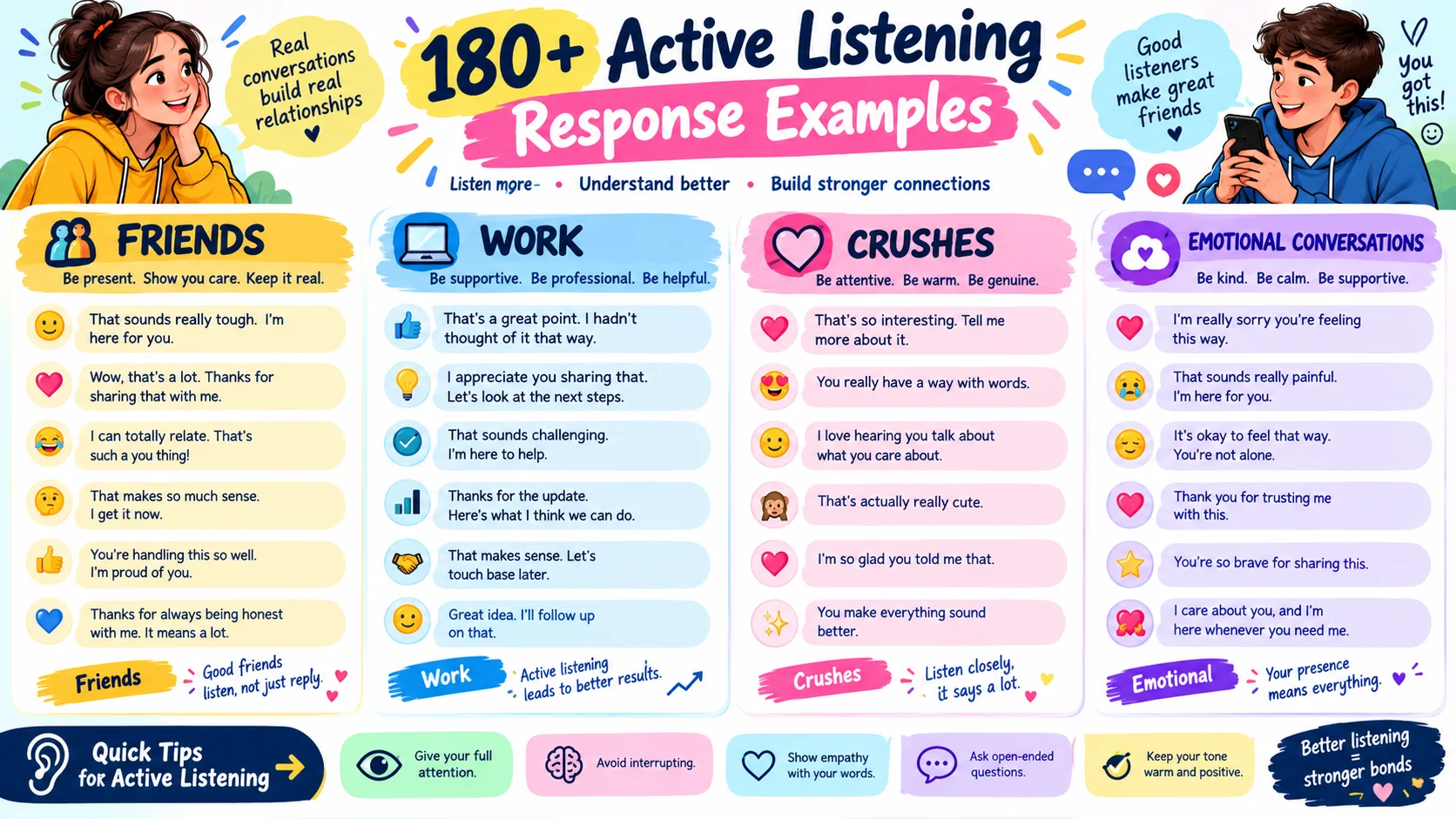
Active listening response examples help you show that you genuinely understand, care about, and are engaged in a conversation. Try replies like “That makes sense,” “I hear you,” “Tell me more,” “I can understand why you feel that way,” and “Thanks for sharing that.”
Top alternatives: I hear you, That makes sense, Tell me more, I understand, Thanks for sharing
Ever get stuck staring at a text because you want to reply thoughtfully, but “okay” feels painfully dry? We have all been there. Whether you are texting a friend, replying to a DM, talking to a crush, handling a work conversation, or comforting someone who is having a rough day, the right response can completely change the vibe. That is where active listening response examples come in handy. They help you sound present without turning every conversation into a therapy session. A good response shows that you actually heard the person, understood their point, and cared about what they said. The trick is choosing the right tone. Sometimes you need warmth. Sometimes you need humor. Sometimes a simple “I get you” says everything. Here are ready-to-use responses for practically every mood and situation.
Funny Active Listening Responses
“Okay, I’m listening with both ears.”
Use this when you want to reassure a friend that they have your full attention.
Meaning: You are playfully saying that you are genuinely paying attention.
“My ears have entered the chat.”
Use this when someone starts telling you an interesting story.
Meaning: You are jokingly announcing that you are ready to listen.
“Proceed, storyteller.”
Use this when a friend has a dramatic or entertaining story to share.
Meaning: You are encouraging them to continue.
“I’m seated. Continue.”
Use this when someone says they have something important or juicy to tell you.
Meaning: You are showing curiosity and attention.
“Say less, I’m locked in.”
Use this when someone needs your undivided attention.
Meaning: You are signaling that you are fully focused.
“My attention span just clocked in.”
Use this when joking with someone before they explain something.
Meaning: You are playfully promising to concentrate.
“I have officially stopped scrolling.”
Use this when someone tells you something worth paying attention to.
Meaning: You are humorously showing that they have your focus.
“Okay, you have the floor.”
Use this when someone wants to explain their side of a situation.
Meaning: You are giving them space to speak.
“I’m listening harder than my Wi-Fi signal.”
Use this when you want to make a supportive moment slightly lighter.
Meaning: You are emphasizing that you are paying close attention.
“The floor is yours, bestie.”
Use this when a friend needs to vent.
Meaning: You are inviting them to speak freely.
“I’m tuned in like it’s the season finale.”
Use this when someone has a dramatic story.
Meaning: You are expressing strong interest.
“Okay, give me the full lore.”
Use this when someone starts explaining the complicated history behind an issue.
Meaning: You want the complete story and context.
Warm Active Listening Responses
“I hear you.”
Use this when someone shares something personal or frustrating.
Meaning: You are acknowledging their feelings without judging them.
“That makes sense.”
Use this when someone explains why they reacted a certain way.
Meaning: You are validating that their perspective is understandable.
“I understand where you’re coming from.”
Use this during a serious conversation about feelings or decisions.
Meaning: You are showing empathy toward their perspective.
“Thanks for telling me that.”
Use this when someone trusts you with something personal.
Meaning: You appreciate their honesty and openness.
“I can see why that affected you.”
Use this when someone explains why an experience was difficult.
Meaning: You are recognizing the emotional impact of their experience.
“That sounds really difficult.”
Use this when someone describes a challenging situation.
Meaning: You are acknowledging their struggle compassionately.
“I’m glad you told me.”
Use this when someone hesitates to open up.
Meaning: You want them to know their honesty matters.
“You have every right to feel that way.”
Use this when someone worries their feelings are unreasonable.
Meaning: You are validating their emotional experience.
“I’m here with you.”
Use this when someone feels overwhelmed or alone.
Meaning: You are offering emotional presence and support.
“I appreciate you being honest with me.”
Use this when someone shares an uncomfortable truth.
Meaning: You value their honesty even when the topic is difficult.
“I can understand why you feel that way.”
Use this when someone explains an emotional reaction.
Meaning: You are acknowledging their feelings without necessarily agreeing with every conclusion.
“Take your time. I’m listening.”
Use this when someone struggles to explain something emotional.
Meaning: You are giving them patience and space.
Polite Active Listening Responses
“I understand.”
Use this in respectful everyday conversations.
Meaning: You are acknowledging what the person said.
“Thank you for explaining that.”
Use this when someone provides useful context.
Meaning: You appreciate their effort to clarify the situation.
“That’s a fair point.”
Use this when someone presents a reasonable perspective.
Meaning: You recognize the validity of what they said.
“I appreciate your perspective.”
Use this during a respectful disagreement.
Meaning: You acknowledge their viewpoint without automatically agreeing.
“I see what you mean.”
Use this when someone explains an idea you had not considered.
Meaning: You are showing that their explanation reached you.
“That’s helpful to understand.”
Use this when someone gives you important information.
Meaning: You recognize that their explanation clarified the issue.
“I appreciate you sharing that.”
Use this when someone offers personal information.
Meaning: You are responding with gratitude and respect.
“I understand your concern.”
Use this when someone raises a worry or objection.
Meaning: You acknowledge the concern respectfully.
“Thanks for clarifying.”
Use this after someone corrects a misunderstanding.
Meaning: You appreciate the clarification.
“I’ll keep that in mind.”
Use this when someone gives you feedback or advice.
Meaning: You are acknowledging their input thoughtfully.
“That gives me a better perspective.”
Use this when someone changes or expands your understanding.
Meaning: You recognize the value of their explanation.
“I appreciate you taking the time to explain.”
Use this after a detailed conversation.
Meaning: You are showing gratitude for their effort.
Professional Active Listening Responses
“I understand your concern.”
Use this when a colleague raises an issue during a professional discussion.
Meaning: You are acknowledging their concern respectfully.
“That’s a useful perspective.”
Use this during meetings or collaborative discussions.
Meaning: You recognize the contribution as valuable.
“I see where you’re coming from.”
Use this during a workplace disagreement.
Meaning: You acknowledge their reasoning without automatically agreeing.
“Thank you for bringing this to my attention.”
Use this when someone identifies a problem.
Meaning: You appreciate being informed about the issue.
“That clarification helps.”
Use this when someone explains a confusing detail.
Meaning: You now have a clearer understanding.
“I appreciate the context.”
Use this when someone provides background information.
Meaning: You recognize that context improves your understanding.
“That’s an important consideration.”
Use this when someone introduces a relevant factor.
Meaning: You are recognizing its significance.
“I’ll take that into consideration.”
Use this when receiving professional feedback.
Meaning: You will consider their input before deciding what to do.
“That makes sense from your perspective.”
Use this when discussing different approaches at work.
Meaning: You understand how their reasoning fits together.
“Thanks for explaining your reasoning.”
Use this when someone explains a professional decision.
Meaning: You appreciate understanding the logic behind it.
“I understand the priority here.”
Use this when someone explains what needs attention first.
Meaning: You recognize the main focus of the situation.
“Let me make sure I understand correctly.”
Use this when details matter and you want to avoid assumptions.
Meaning: You are actively checking your understanding.
Flirty Active Listening Responses
“Okay, I’m listening. Especially when it’s you.”
Use this when a crush starts sharing something personal.
Meaning: You are showing interest with a subtle romantic touch.
“Tell me more, I like hearing you talk.”
Use this during a warm conversation with someone you like.
Meaning: You genuinely enjoy their company and voice.
“I could listen to you all day.”
Use this when the conversation has a sweet romantic vibe.
Meaning: You are expressing strong interest in them.
“You have my full attention.”
Use this when you want to make your interest obvious.
Meaning: You are giving them focused attention.
“I’m listening, cutie.”
Use this when the relationship already has playful affection.
Meaning: You are combining attention with flirtation.
“Keep talking, I’m enjoying this.”
Use this when you are having an engaging conversation.
Meaning: You want the conversation to continue.
“I like learning how your mind works.”
Use this during a deeper conversation with someone you like.
Meaning: You are attracted to their personality and thoughts.
“You definitely have my attention.”
Use this when someone catches your interest.
Meaning: You are openly signaling attraction.
“Go on, I’m invested now.”
Use this when their story has become interesting.
Meaning: You want to hear more while keeping things playful.
“I’m listening, and yes, I’m smiling.”
Use this during a cute texting exchange.
Meaning: Their words are making you happy.
“You make listening dangerously easy.”
Use this when you want a clever romantic compliment.
Meaning: You enjoy listening to them more than usual.
“I’m all ears when it comes to you.”
Use this when you want a classic flirty response.
Meaning: You are expressing special interest in what they say.
Cute Active Listening Responses
“I’m listening, promise.”
Use this when someone wants reassurance that you care.
Meaning: You are gently confirming your attention.
“Tell me everything.”
Use this when a friend or crush wants to share something.
Meaning: You are inviting them to open up.
“I’ve got you.”
Use this when someone needs emotional support.
Meaning: You are reassuring them that they are not alone.
“I’m right here.”
Use this when someone feels vulnerable.
Meaning: You are offering a comforting presence.
“Your feelings matter.”
Use this when someone doubts whether they should open up.
Meaning: You are affirming the importance of their emotions.
“You can tell me.”
Use this when someone seems nervous about sharing something.
Meaning: You are creating a safe and supportive atmosphere.
“I’m listening, no judgment.”
Use this when someone needs to vent honestly.
Meaning: You are promising acceptance while they speak.
“I’m glad you trusted me with this.”
Use this when someone shares something deeply personal.
Meaning: You value the trust they placed in you.
“You don’t have to rush.”
Use this when someone is struggling to explain themselves.
Meaning: You are giving them patience.
“I’m here for the whole story.”
Use this when someone worries they are talking too much.
Meaning: You are reassuring them that their story matters.
“You can take your time.”
Use this during an emotional conversation.
Meaning: You are encouraging them to speak comfortably.
“Sending you a giant virtual hug.”
Use this when someone needs warmth but you cannot be physically present.
Meaning: You are expressing affection and emotional support.
Sarcastic Active Listening Responses
“Wow, look at me actually paying attention.”
Use this when joking with a close friend.
Meaning: You are humorously acknowledging your focus.
“Noted, documented, emotionally archived.”
Use this when someone shares an unforgettable story.
Meaning: You are joking that you will remember it.
“I heard every word, shockingly.”
Use this when teasing someone who doubts your attention.
Meaning: You are playfully confirming that you listened.
“My brain has accepted the assignment.”
Use this when someone gives you a complicated explanation.
Meaning: You are jokingly promising to process it.
“I am listening, against all odds.”
Use this when the topic is long but you want to keep things playful.
Meaning: You are teasing while still showing attention.
“Consider me emotionally subscribed.”
Use this when a friend shares ongoing drama.
Meaning: You are jokingly saying you want future updates.
“I have entered listening mode.”
Use this before someone starts explaining something important.
Meaning: You are humorously signaling focus.
“Okay, my curiosity has been activated.”
Use this when someone hints at an interesting story.
Meaning: You want them to continue.
“I’m listening, your honor.”
Use this when joking during a serious explanation.
Meaning: You are playfully giving them the spotlight.
“The evidence has been received.”
Use this when a friend presents their side of an argument.
Meaning: You are humorously acknowledging their explanation.
“Message received loud and clear.”
Use this after someone makes their feelings clear.
Meaning: You understand their point.
“I have processed the emotional newsletter.”
Use this with a friend who regularly shares life updates.
Meaning: You are playfully acknowledging their latest update.
Chill And Casual Active Listening Responses
“Yeah, I get you.”
Use this during a relaxed conversation with a friend.
Meaning: You understand their point without making the moment formal.
“For sure.”
Use this when someone shares an opinion you understand.
Meaning: You are casually acknowledging them.
“I feel you.”
Use this when someone describes a relatable experience.
Meaning: You understand their emotions or perspective.
“Totally get it.”
Use this when someone explains their reaction.
Meaning: You are casually validating their point.
“Makes sense.”
Use this when their explanation is straightforward.
Meaning: You understand how their reasoning connects.
“Yeah, that checks out.”
Use this when someone’s story or explanation seems reasonable.
Meaning: You are casually saying their point makes sense.
“I’m with you.”
Use this when supporting someone during a conversation.
Meaning: You are signaling understanding and solidarity.
“Gotcha.”
Use this when someone explains a simple detail.
Meaning: You understand what they mean.
“I hear you.”
Use this when someone wants acknowledgment.
Meaning: You are showing that you are paying attention.
“That’s fair.”
Use this when someone gives a reasonable explanation.
Meaning: You recognize their position as understandable.
“Yeah, I see it.”
Use this when someone explains their perspective.
Meaning: You can understand how they reached their conclusion.
“I’m following.”
Use this when someone is explaining a longer story.
Meaning: You are confirming that you understand what they are saying.
Confident Active Listening Responses
“I understand exactly what you mean.”
Use this when you are confident that you understand the message.
Meaning: You are clearly acknowledging their point.
“I hear you, and I respect that.”
Use this when someone shares a different opinion.
Meaning: You recognize their position without pretending to agree.
“Your point is clear.”
Use this when someone explains their position firmly.
Meaning: You understand the message they are communicating.
“I understand the situation.”
Use this when someone gives you important context.
Meaning: You are confidently confirming your understanding.
“I appreciate the honesty.”
Use this when someone speaks openly about a difficult issue.
Meaning: You value direct and truthful communication.
“I see the bigger picture now.”
Use this when someone provides missing context.
Meaning: Their explanation helped you understand the situation more completely.
“That gives me what I need to understand.”
Use this when someone provides useful details.
Meaning: You now have enough information to understand the issue.
“I understand your position.”
Use this during a disagreement or serious discussion.
Meaning: You recognize their viewpoint clearly.
“I hear what you’re saying.”
Use this when you want to acknowledge someone’s message directly.
Meaning: You are confirming that their words have been heard.
“That’s clear to me now.”
Use this after someone resolves a misunderstanding.
Meaning: Their explanation removed your confusion.
“I understand the concern.”
Use this when someone raises an important issue.
Meaning: You recognize what is troubling them.
“I appreciate the directness.”
Use this when someone communicates clearly.
Meaning: You value straightforward communication.
Emotional Active Listening Responses
“That must have hurt.”
Use this when someone describes a painful experience.
Meaning: You recognize the emotional pain behind their story.
“I’m really sorry you went through that.”
Use this when someone shares a difficult experience.
Meaning: You are expressing compassion for what happened.
“I can hear how much this matters to you.”
Use this when someone speaks passionately about an issue.
Meaning: You recognize the emotional importance of the topic.
“That sounds heavier than it looks.”
Use this when someone tries to minimize their struggle.
Meaning: You recognize that their situation may carry deeper emotional weight.
“You didn’t have to carry that alone.”
Use this when someone reveals they struggled silently.
Meaning: You want them to know support was available.
“I’m sorry you had to deal with that.”
Use this when someone describes a stressful situation.
Meaning: You are expressing empathy for their experience.
“I understand why that stayed with you.”
Use this when someone describes an experience they cannot forget.
Meaning: You recognize its lasting emotional effect.
“That sounds incredibly frustrating.”
Use this when someone describes repeated problems.
Meaning: You are validating their frustration.
“I can see why you needed to talk about it.”
Use this when someone finally opens up.
Meaning: You recognize the importance of expressing their feelings.
“Thank you for trusting me.”
Use this when someone shares something vulnerable.
Meaning: You appreciate their confidence in you.
“Your feelings make sense to me.”
Use this when someone worries they are overreacting.
Meaning: You are validating their emotional response.
“I’m listening, even if I don’t have the perfect answer.”
Use this when someone needs support more than advice.
Meaning: You are offering presence instead of pretending to solve everything.
Sweet Active Listening Responses
“I genuinely want to understand.”
Use this when someone is explaining something important to them.
Meaning: You are showing sincere interest.
“Thank you for letting me in.”
Use this when someone shares a personal part of their life.
Meaning: You appreciate being trusted with their feelings.
“I care about what you have to say.”
Use this when someone doubts whether their words matter.
Meaning: You are reassuring them that their voice matters to you.
“I’m always happy to listen.”
Use this when someone needs a supportive person.
Meaning: You are offering ongoing emotional availability.
“You matter to me, so I’m listening.”
Use this when comforting someone close to you.
Meaning: Your attention comes from genuine care.
“I’m glad you felt comfortable telling me.”
Use this when someone shares something personal.
Meaning: You appreciate their trust.
“I want to hear your side.”
Use this when there has been a misunderstanding.
Meaning: You want to understand their perspective before judging.
“You deserve to be heard.”
Use this when someone feels ignored.
Meaning: You are affirming their right to express themselves.
“I’m listening because this matters.”
Use this when discussing an important emotional topic.
Meaning: You are emphasizing that their words deserve attention.
“I’m grateful you shared this with me.”
Use this when someone opens up about something meaningful.
Meaning: You appreciate their vulnerability.
“I’ll remember what you told me.”
Use this when someone shares an important preference or feeling.
Meaning: You are showing that their words made an impression.
“You never have to wonder if I’m listening.”
Use this with someone close to you during a heartfelt conversation.
Meaning: You are reassuring them that you care about what they say.
Clever Active Listening Responses
“So what I’m hearing is…”
Use this when you want to summarize someone’s point before responding.
Meaning: You are checking that you understood their message correctly.
“Let me make sure I caught that.”
Use this when a conversation contains several important details.
Meaning: You want to verify your understanding.
“That adds a new layer to the story.”
Use this when someone provides unexpected context.
Meaning: Their explanation changes or expands your understanding.
“That actually puts things into perspective.”
Use this when new information explains a previous misunderstanding.
Meaning: You now see the situation more clearly.
“Interesting, I hadn’t looked at it that way.”
Use this when someone offers a perspective you had not considered.
Meaning: You are acknowledging a new viewpoint.
“That distinction actually matters.”
Use this when someone makes an important clarification.
Meaning: You recognize a meaningful difference.
“Now I understand the connection.”
Use this when someone explains how two ideas relate.
Meaning: Their explanation helped you connect the dots.
“That explains a lot.”
Use this when someone reveals missing information.
Meaning: The new detail makes the situation easier to understand.
“I see where the misunderstanding happened.”
Use this when both sides realize there was confusion.
Meaning: You are identifying the source of the communication problem.
“That gives me a clearer picture.”
Use this after someone provides useful context.
Meaning: You now understand the situation more fully.
“I hadn’t considered that angle.”
Use this when someone introduces a different perspective.
Meaning: You acknowledge that their viewpoint added something new.
“That’s a detail worth remembering.”
Use this when someone shares an important point.
Meaning: You recognize the relevance of what they said.
Supportive Active Listening Responses
“I’m here if you want to keep talking.”
Use this when someone seems like they still have more to say.
Meaning: You are offering continued support without pressure.
“You can be honest with me.”
Use this when someone seems afraid of being judged.
Meaning: You are encouraging open communication.
“I won’t rush you.”
Use this when someone needs time to explain their feelings.
Meaning: You are giving them patience and emotional space.
“You don’t have to figure it all out right now.”
Use this when someone feels overwhelmed.
Meaning: You are reducing pressure while offering support.
“I’m listening without judging.”
Use this when someone needs a safe space to vent.
Meaning: You are emphasizing acceptance.
“We can take this one part at a time.”
Use this when someone shares a complicated problem.
Meaning: You are helping make the conversation feel manageable.
“I’m not going anywhere.”
Use this when someone fears losing support.
Meaning: You are reassuring them that you are present.
“You can talk as much as you need.”
Use this when someone needs to release their emotions.
Meaning: You are giving them permission to express themselves.
“I understand that this is important to you.”
Use this when someone wants their concerns taken seriously.
Meaning: You recognize the significance of the issue.
“I’m listening, not trying to fix it.”
Use this when someone needs empathy rather than advice.
Meaning: You are offering understanding instead of immediately solving the problem.
“You have my attention.”
Use this when someone needs focused support.
Meaning: You are assuring them that you are fully present.
“Keep going when you’re ready.”
Use this when someone pauses during an emotional story.
Meaning: You are giving them control over the pace.
Mature Active Listening Responses
“I understand your perspective, even if mine is different.”
Use this during a respectful disagreement.
Meaning: You acknowledge their viewpoint without abandoning your own.
“Let’s make sure we understand each other.”
Use this when communication becomes unclear.
Meaning: You want mutual understanding before moving forward.
“I appreciate you explaining your reasoning.”
Use this when discussing a difficult decision.
Meaning: You value understanding the thought process behind their position.
“I can respect that.”
Use this when someone expresses a different preference or boundary.
Meaning: You acknowledge their choice respectfully.
“I hear the concern behind what you’re saying.”
Use this when someone’s words carry an underlying worry.
Meaning: You are recognizing both the message and emotion.
“That’s something worth talking through.”
Use this when an issue needs more discussion.
Meaning: You are encouraging thoughtful communication.
“I don’t want to assume, so tell me more.”
Use this when you need additional context.
Meaning: You prefer understanding over guessing.
“I’d rather understand than react too quickly.”
Use this when emotions are running high.
Meaning: You want to listen before responding impulsively.
“I appreciate your honesty, even when it’s difficult.”
Use this when someone shares uncomfortable feedback.
Meaning: You value truthful communication.
“I can see why you reached that conclusion.”
Use this when someone explains their reasoning.
Meaning: You understand how their perspective developed.
“Let’s clear up what we may be misunderstanding.”
Use this when two people interpret the same situation differently.
Meaning: You want to resolve confusion calmly.
“I think I understand what you need from me.”
Use this when someone explains their expectations.
Meaning: You are confirming that you understand what they want.
Respectful Disagreement Responses
“I hear you, but I see it differently.”
Use this when you disagree without wanting conflict.
Meaning: You acknowledge their view while expressing your own.
“I understand your point, even though I disagree.”
Use this during a serious discussion.
Meaning: You separate understanding from agreement.
“That’s a perspective I can understand.”
Use this when someone has a different opinion.
Meaning: Their reasoning is understandable even if you disagree.
“I appreciate where you’re coming from.”
Use this when a disagreement needs a calmer tone.
Meaning: You recognize their perspective respectfully.
“Let’s look at both sides.”
Use this when a disagreement becomes complicated.
Meaning: You want to consider multiple viewpoints.
“I may be seeing it differently.”
Use this when you want a softer disagreement.
Meaning: You are presenting your perspective without attacking theirs.
“I understand why you feel that way.”
Use this when emotions are involved in a disagreement.
Meaning: You validate their feelings without necessarily agreeing.
“That’s fair, although I have another view.”
Use this when you want to disagree politely.
Meaning: You recognize their point before sharing yours.
“I hear your reasoning.”
Use this when someone explains their position carefully.
Meaning: You acknowledge the logic they presented.
“We might simply have different perspectives here.”
Use this when neither person is changing their view.
Meaning: You frame the disagreement as a difference in perspective.
“I respect your position.”
Use this when maintaining mutual respect matters.
Meaning: You acknowledge their right to hold their view.
“Let’s focus on understanding each other first.”
Use this when a disagreement becomes heated.
Meaning: You want communication to come before winning the argument.
Deep And Thoughtful Active Listening Responses
“What part of this feels hardest for you?”
Use this when someone shares a complicated emotional situation.
Meaning: You are inviting them to explore the part that affects them most.
“What do you wish had happened instead?”
Use this when someone describes disappointment.
Meaning: You are helping them explain their unmet expectations.
“How did that make you feel?”
Use this when someone describes an important experience.
Meaning: You are inviting emotional reflection.
“What do you think you need right now?”
Use this when someone seems overwhelmed.
Meaning: You are helping them identify the support they want.
“What’s been on your mind the most?”
Use this when someone says they have a lot going on.
Meaning: You are inviting them to identify their biggest concern.
“I can tell there’s more behind that.”
Use this when someone’s words suggest deeper feelings.
Meaning: You are gently inviting them to share more.
“What would make this feel easier?”
Use this when someone describes a difficult situation.
Meaning: You are exploring practical or emotional support.
“Which part matters most to you?”
Use this when someone discusses several concerns at once.
Meaning: You are helping identify their main priority.
“What do you want me to understand most?”
Use this when someone is explaining something emotionally important.
Meaning: You are asking them to identify their central message.
“Has this been weighing on you for a while?”
Use this when someone reveals an ongoing concern.
Meaning: You are acknowledging that the issue may have lasted longer than expected.
“Do you want me to listen or help you brainstorm?”
Use this when someone is venting or problem-solving.
Meaning: You are asking what kind of support they actually want.
“What would you like me to take away from this?”
Use this after a serious explanation.
Meaning: You are checking your understanding of their main point.
Playful And Internet-Friendly Active Listening Responses
“Okay bestie, I’m locked in.”
Use this when a friend starts telling you important gossip or life updates.
Meaning: You are playfully promising your full attention.
“Drop the lore.”
Use this when someone hints at a complicated story.
Meaning: You want the complete background.
“I’m seated for this.”
Use this when someone starts an entertaining explanation.
Meaning: You are showing strong interest.
“The floor is yours, icon.”
Use this when encouraging a friend to speak.
Meaning: You are giving them the spotlight in a playful way.
“I’m listening with premium attention.”
Use this when joking with someone close to you.
Meaning: You are exaggerating your focus for humor.
“Okay, I’m tuned all the way in.”
Use this when someone has something important to say.
Meaning: You are confirming focused attention.
“Give me the director’s cut.”
Use this when you want the complete version of a story.
Meaning: You want all the details.
“I need the full context package.”
Use this when a story is missing an important background.
Meaning: You want enough information to understand the situation.
“I’m emotionally subscribed to this story.”
Use this when a friend shares ongoing drama.
Meaning: You are joking that you want future updates.
“Okay, I’m processing.”
Use this when someone gives you surprising information.
Meaning: You need a moment while showing that you heard them.
“My attention has been successfully captured.”
Use this when something becomes unexpectedly interesting.
Meaning: You are humorously admitting that you are invested.
“No scrolling, just listening.”
Use this when you want to reassure someone that they have your focus.
Meaning: You are saying they have your undivided attention.
Active Listening Responses For Texting
“I get what you mean.”
Use this when a friend sends a thoughtful message.
Meaning: You understand the point they are making.
“Thanks for telling me.”
Use this when someone shares something personal through text.
Meaning: You appreciate their openness.
“I’m glad you said that.”
Use this when someone finally expresses a concern.
Meaning: You appreciate their honesty.
“That makes sense to me.”
Use this when someone explains their behavior over text.
Meaning: Their explanation feels understandable.
“Tell me more when you’re ready.”
Use this when someone hints at a deeper issue.
Meaning: You are inviting them to continue without pressure.
“I’m here. Take your time.”
Use this when someone is struggling to explain themselves.
Meaning: You are offering patience and support.
“I hear you.”
Use this when someone wants acknowledgment rather than advice.
Meaning: You are showing that their message landed.
“I understand why you feel that way.”
Use this when someone explains an emotional reaction.
Meaning: You are validating their perspective.
“Thanks for being real with me.”
Use this when someone communicates honestly.
Meaning: You appreciate their authenticity.
“I’m following you.”
Use this when someone sends a long explanation.
Meaning: You understand what they are saying.
“That actually clears things up.”
Use this when someone resolves confusion.
Meaning: Their message helped you understand the situation.
“I appreciate you opening up.”
Use this when someone shares something vulnerable through text.
Meaning: You value the trust behind their message.
FAQs
What does active listening mean?
Active listening means paying attention to what someone says, understanding the message, acknowledging their feelings, and responding thoughtfully instead of simply waiting for your turn to speak.
What is a good active listening response?
A good response depends on the situation. Simple options include “I hear you,” “That makes sense,” “Tell me more,” “I understand,” and “Thanks for sharing that.”
Can active listening responses sound flirty?
Yes. With someone you already have a romantic or playful connection with, responses such as “I could listen to you all day” can communicate interest while still showing genuine attention.
How do I respond professionally while showing active listening?
Use clear and respectful phrases such as “I understand your concern,” “That’s a useful perspective,” “Thanks for clarifying,” or “Let me make sure I understand correctly.”
What should I say if I do not actually understand someone?
Avoid pretending. Try “I want to make sure I understand you correctly,” “Could you explain that another way?” or “Tell me a little more about what you mean.”
Is humor appropriate in active listening?
Humor can work with friends, close colleagues, or people who enjoy playful communication. However, serious emotional conversations usually call for warmth, patience, and sincerity first.
Conclusion
The best active listening response examples do more than keep a conversation moving. They show people that their words actually reached you. Whether you are replying to a friend, texting a crush, handling a workplace discussion, or supporting someone through a difficult moment, your response can shape the entire vibe. You do not need a perfect speech. Sometimes “I hear you,” “Tell me more,” or even a well-timed joke is enough. Try different responses based on the person, situation, and mood. Save this list for your next conversation, share it with a friend who always says “idk what to reply,” and keep a few favorites ready for when words suddenly disappear.