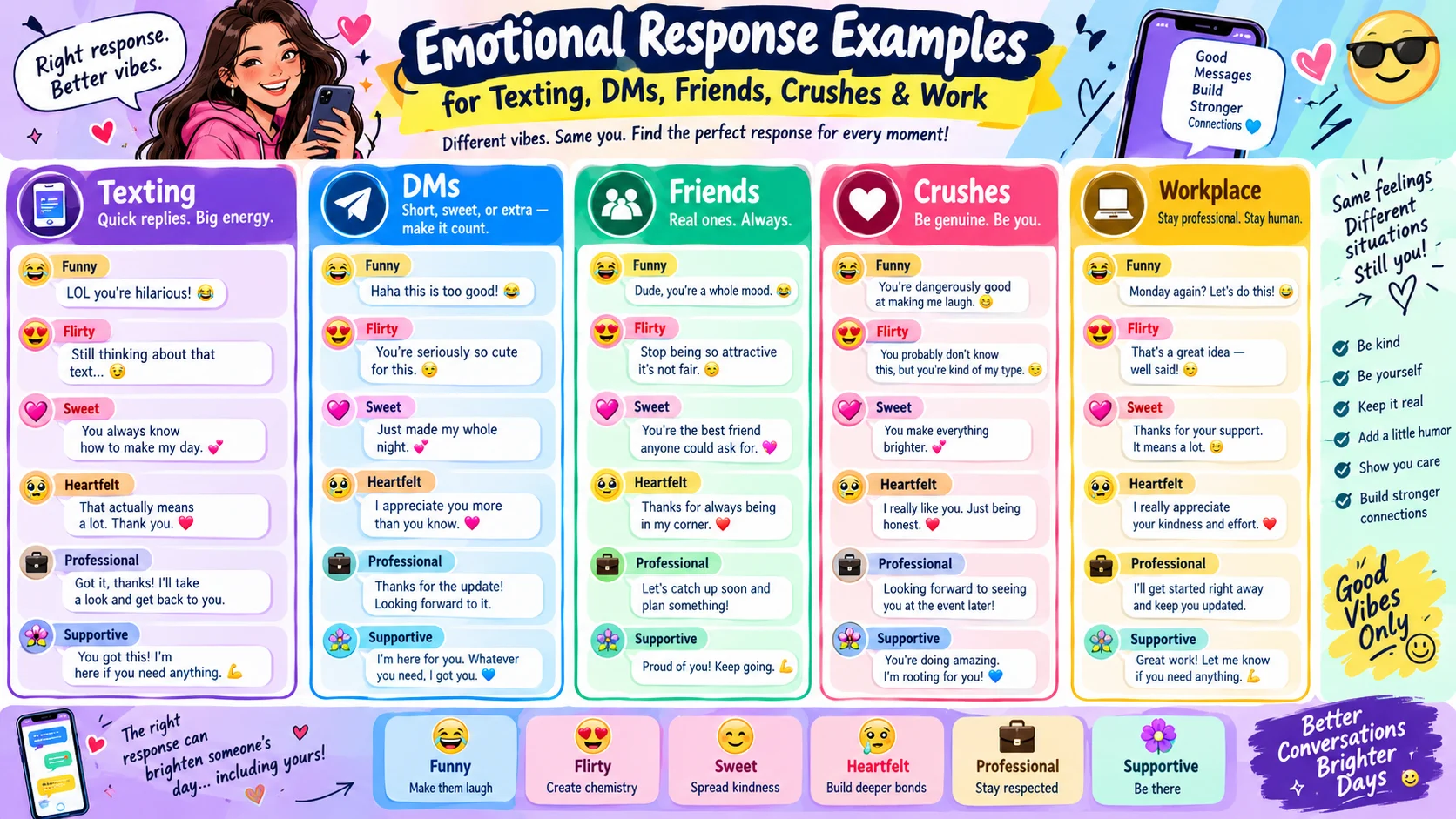
An emotional response example can help you reply when ordinary words just do not capture what you feel. Choose a response that matches your mood, relationship, and situation without overthinking it.
Heartfelt reply, sweet response, honest reaction, thoughtful message, emotional comeback
Texting someone back can be weirdly difficult. You know exactly what you feel, but somehow typing three words turns into a full mental debate. Should you be sweet? Funny? Flirty? Honest? Or just send a heart emoji and disappear?
That is where an emotional response example becomes useful. Whether you are replying to a close friend, answering a crush, responding to a meaningful DM, handling a work message, or trying to say something heartfelt without sounding overly dramatic, the right words can make a huge difference.
A good response does more than fill the silence. It can show appreciation, comfort someone, express affection, set a boundary, or make a serious moment feel lighter. Sometimes one thoughtful sentence says what a whole paragraph cannot.
Below, you will find ready-to-send responses organized by different moods and personalities. Pick the one that sounds like you, adjust it to fit the moment, and send it with confidence.
Funny Emotional Responses
“Well, now you’ve made my emotional side clock in.”
Use this when someone unexpectedly says something sweet or meaningful.
Meaning: You are touched, but you want to keep the moment playful.
“Okay, who gave you permission to make me feel things?”
Use this after receiving an unexpectedly heartfelt message.
Meaning: Their words affected you more than you expected.
“Not me pretending I’m emotionally stable right now.”
Use this when a message hits you harder than expected.
Meaning: You are genuinely affected while joking about your reaction.
“I was not prepared for this level of feelings today.”
Use this when someone sends a surprisingly emotional text.
Meaning: Their message caught you completely off guard.
“Great, now I need tissues and a personality reset.”
Use this when a sweet message makes you emotional.
Meaning: You are touched enough to joke about getting emotional.
“My heart just did the loading circle.”
Use this when you need a funny way to describe being speechless.
Meaning: Your emotions briefly overwhelmed your ability to respond.
“Excuse me while I emotionally reboot.”
Use this when someone says something unexpectedly touching.
Meaning: You need a moment to process the feelings.
“That was unnecessarily wholesome.”
Use this when someone says something unusually kind.
Meaning: You appreciate the sweetness while keeping things casual.
“Okay, feelings detected. This is getting serious.”
Use this when a conversation suddenly becomes heartfelt.
Meaning: You recognize that the moment has become emotionally meaningful.
“I came here to text, not to develop emotions.”
Use this when an ordinary conversation suddenly turns deep.
Meaning: You did not expect the interaction to affect you emotionally.
“My emotional budget did not include this.”
Use this when someone sends a deeply touching message.
Meaning: You are emotionally overwhelmed in a humorous way.
“And this is why I should not have feelings before dinner.”
Use this when a message makes you unexpectedly sentimental.
Meaning: You are joking about becoming emotional at the wrong time.
Heartfelt Responses
“That genuinely means more to me than you know.”
Use this when someone says something deeply meaningful.
Meaning: Their words have a strong emotional impact on you.
“I really needed to hear that today.”
Use this when someone’s message arrives at an important moment.
Meaning: Their words gave you comfort or encouragement.
“Thank you for saying that from the heart.”
Use this when someone shares something sincere.
Meaning: You appreciate their honesty and emotional openness.
“I’m honestly touched by that.”
Use this when you receive a thoughtful message.
Meaning: Their words made you feel appreciated or cared for.
“That will stay with me for a long time.”
Use this after receiving a particularly meaningful message.
Meaning: You believe their words will remain memorable.
“You have no idea how much that means to me.”
Use this when someone shows genuine support.
Meaning: Their kindness has affected you deeply.
“I’m grateful you said that.”
Use this when someone’s words bring reassurance.
Meaning: You value their support and timing.
“That was exactly what my heart needed.”
Use this when someone’s message provides emotional comfort.
Meaning: Their words helped you feel understood or supported.
“I really appreciate your honesty.”
Use this when someone expresses genuine feelings.
Meaning: You respect their openness and sincerity.
“That touched a part of me I don’t usually talk about.”
Use this when someone reaches a deeply personal emotional place.
Meaning: Their message connected with something meaningful inside you.
“I’ll remember that more than you realize.”
Use this when someone gives you meaningful encouragement.
Meaning: Their words have lasting emotional value.
“Thank you for making me feel understood.”
Use this when someone accurately recognizes your feelings.
Meaning: You feel seen and emotionally supported.
Flirty Emotional Responses
“Careful, you’re making it very hard not to like you.”
Use this when a crush sends something unexpectedly sweet.
Meaning: You are attracted to them and enjoying the emotional connection.
“You really know how to make my heart behave differently.”
Use this when someone sends a romantic message.
Meaning: Their attention creates noticeable romantic feelings.
“Why do your messages always hit differently?”
Use this when someone consistently makes you smile.
Meaning: Their words have a special effect on you.
“I’m starting to think you know exactly what you’re doing.”
Use this when someone intentionally charms you.
Meaning: You suspect they know how much they affect you.
“That was dangerously cute.”
Use this when a crush says something adorable.
Meaning: Their sweetness made you feel attracted and amused.
“You’re making this whole feelings thing inconveniently easy.”
Use this when your connection is becoming stronger.
Meaning: You are developing feelings without much resistance.
“Okay, that definitely made my heart skip.”
Use this after receiving a romantic or affectionate text.
Meaning: Their message created a strong romantic reaction.
“I wasn’t planning on smiling at my phone today.”
Use this when a message from someone special makes you smile.
Meaning: Their attention unexpectedly brightened your mood.
“You have a suspicious talent for making me blush.”
Use this when someone sends a charming message.
Meaning: Their words make you feel shy and romantically excited.
“I think my heart has officially entered the chat.”
Use this when you want a playful romantic response.
Meaning: You are acknowledging growing emotional interest.
“That was smooth, and unfortunately, I liked it.”
Use this when someone gives you a clever compliment.
Meaning: Their charm worked on you.
“Keep talking like that and I might actually catch feelings.”
Use this when playful flirting is already happening.
Meaning: You are teasingly admitting romantic interest.
Sweet Responses
“That was so sweet of you.”
Use this when someone shows unexpected kindness.
Meaning: You genuinely appreciate their thoughtful action.
“You just made my whole day better.”
Use this when someone’s message brightens your mood.
Meaning: Their words had a positive emotional effect.
“You’re honestly such a kind person.”
Use this when someone consistently treats you well.
Meaning: You admire their kindness and character.
“That made my heart happy.”
Use this after receiving a warm message.
Meaning: Their words created genuine happiness.
“You always know how to make me smile.”
Use this when someone repeatedly cheers you up.
Meaning: Their presence has a positive effect on you.
“That was exactly the sweetness I needed.”
Use this when you are having a difficult day.
Meaning: Their kindness provided emotional comfort.
“You’re too thoughtful for your own good.”
Use this when someone does something unexpectedly considerate.
Meaning: You appreciate their thoughtfulness in a playful way.
“That was genuinely lovely to hear.”
Use this when someone gives you meaningful praise.
Meaning: Their words made you feel valued.
“You just added a little sunshine to my day.”
Use this when someone’s message makes you feel happier.
Meaning: Their kindness brought warmth to your day.
“I’m smiling way too much right now.”
Use this after receiving a cute or affectionate message.
Meaning: Their words made you genuinely happy.
“You have such a sweet way of saying things.”
Use this when someone expresses themselves warmly.
Meaning: You appreciate both their message and delivery.
“Sending that kindness right back to you.”
Use this when you want to return someone’s warmth.
Meaning: You want the positive feeling to be mutual.
Polite Emotional Responses
“Thank you, I really appreciate that.”
Use this when someone offers sincere encouragement or support.
Meaning: You acknowledge their kindness respectfully.
“That was very thoughtful of you to say.”
Use this when someone gives you meaningful feedback.
Meaning: You recognize the care behind their words.
“I’m grateful for your kind words.”
Use this when responding to heartfelt appreciation.
Meaning: You sincerely value what they expressed.
“That means a great deal to me.”
Use this when you want to sound warm but composed.
Meaning: Their message has genuine personal importance.
“I truly appreciate your support.”
Use this when someone helps you during a difficult moment.
Meaning: Their support matters to you.
“Thank you for taking the time to say that.”
Use this when someone sends a thoughtful message.
Meaning: You appreciate both their words and effort.
“That was kind of you to share.”
Use this when someone opens up emotionally.
Meaning: You respect their willingness to be sincere.
“I’m glad you shared that with me.”
Use this when someone tells you something personal.
Meaning: You value their trust.
“Your words were very comforting.”
Use this when someone provides emotional reassurance.
Meaning: Their message helped you feel calmer.
“I appreciate your honesty and kindness.”
Use this when someone communicates openly and respectfully.
Meaning: You value both their truthfulness and approach.
“Thank you for understanding where I’m coming from.”
Use this when someone responds with empathy.
Meaning: You feel heard rather than judged.
“That was genuinely meaningful to hear.”
Use this when someone offers sincere encouragement.
Meaning: Their message had emotional significance for you.
Professional Emotional Responses
“Thank you for your thoughtful message.”
Use this when replying to a supportive colleague or professional contact.
Meaning: You appreciate their considerate communication.
“I sincerely appreciate your support.”
Use this when someone offers professional encouragement.
Meaning: Their support is valuable to you.
“That means a great deal to me professionally.”
Use this when receiving meaningful recognition at work.
Meaning: Their acknowledgment matters to your career.
“Thank you for recognizing the effort involved.”
Use this when someone acknowledges your work.
Meaning: You appreciate their recognition of your contribution.
“I’m grateful for your kind feedback.”
Use this when receiving positive professional comments.
Meaning: You value their constructive appreciation.
“I truly appreciate you taking the time to share that.”
Use this when someone sends detailed encouragement.
Meaning: You respect their effort and thoughtful communication.
“Your encouragement is greatly appreciated.”
Use this when responding to professional support.
Meaning: Their encouragement has genuine value.
“Thank you for your understanding and consideration.”
Use this when someone handles a sensitive situation respectfully.
Meaning: You appreciate their empathy and professionalism.
“I’m glad we could approach this with mutual understanding.”
Use this after resolving a sensitive workplace issue.
Meaning: You value respectful communication and cooperation.
“I appreciate your confidence in my work.”
Use this when someone expresses trust in your abilities.
Meaning: Their professional confidence is meaningful to you.
“Thank you for the thoughtful recognition.”
Use this when receiving professional praise.
Meaning: You appreciate being acknowledged for your contribution.
“I’m grateful for the opportunity and your support.”
Use this after receiving professional encouragement or an opportunity.
Meaning: You value both the opportunity and the person supporting you.
Creative Emotional Responses
“That message just painted a little smile on my face.”
Use this when someone sends a beautifully worded message.
Meaning: Their words created a warm emotional reaction.
“You somehow turned a few words into a whole feeling.”
Use this when someone’s message feels unusually powerful.
Meaning: Their expression communicated more than the literal words.
“That landed softly but stayed loudly.”
Use this after receiving a memorable emotional message.
Meaning: The message felt gentle but left a strong impression.
“My heart understood that before my brain did.”
Use this when a message feels instantly meaningful.
Meaning: You are emotionally connected with their words immediately.
“That sentence found its way straight to my heart.”
Use this after receiving a deeply touching message.
Meaning: Their words affected you on a personal level.
“You just gave my thoughts something beautiful to hold onto.”
Use this when someone’s message offers comfort.
Meaning: Their words gave you something positive to remember.
“Some messages are read, and some are felt.”
Use this when a message has strong emotional meaning.
Meaning: You believe their words created a deeper emotional experience.
“That was a tiny message with a surprisingly big feeling.”
Use this when a short text feels powerful.
Meaning: The message carried more emotion than its length suggests.
“You put a feeling into words better than I could.”
Use this when someone accurately describes something you feel.
Meaning: You admire how clearly they expressed an emotion.
“That message deserves a permanent spot in my memory.”
Use this when something feels especially meaningful.
Meaning: You expect to remember their words for a long time.
“You somehow made a simple moment feel important.”
Use this when someone’s words add meaning to an ordinary situation.
Meaning: Their message gave the moment emotional significance.
“That was beautifully said, and I felt every word.”
Use this when someone expresses something deeply sincere.
Meaning: Their message connected with you emotionally.
Sarcastic Emotional Responses
“Wow, looking at you accidentally makes me emotional.”
Use this when someone unexpectedly touches your feelings.
Meaning: You are genuinely moved but want to hide it behind humor.
“Fantastic, now I have feelings to deal with.”
Use this when a message catches you emotionally.
Meaning: You are joking about being affected.
“Rude. I was trying to stay emotionally unavailable.”
Use this when someone breaks through your usual emotional distance.
Meaning: Their words made you care more than expected.
“Thanks, I definitely needed another reason to overthink.”
Use this when a meaningful message gives you a lot to process.
Meaning: Their words triggered emotional reflection.
“Well, that was inconveniently heartfelt.”
Use this when someone gets unexpectedly sincere.
Meaning: Their emotional honesty caught you off guard.
“Great timing. My emotional defenses were finally working.”
Use this when someone suddenly becomes affectionate.
Meaning: Their message broke through your emotional guard.
“I see we’re choosing feelings today.”
Use this when a conversation becomes unexpectedly deep.
Meaning: You are playfully acknowledging the emotional shift.
“How dare you make me smile like that.”
Use this when someone’s message makes you happy.
Meaning: You enjoyed the message more than you want to admit.
“That was suspiciously wholesome.”
Use this when someone is unusually kind.
Meaning: You appreciate their sweetness while teasing them.
“I blame you for this emotional inconvenience.”
Use this when someone’s words affect your mood.
Meaning: You are jokingly holding them responsible for your feelings.
“Well, now I have to pretend that it didn’t touch me.”
Use this when someone says something heartfelt.
Meaning: You are genuinely moved but responding playfully.
“Not you casually ruining my emotionally composed image.”
Use this when someone gets you to open up.
Meaning: Their message made you more vulnerable than expected.
Cute Emotional Responses
“Aww, my heart just did a little happy dance.”
Use this when someone says something adorable.
Meaning: Their message made you genuinely happy.
“Stop being this adorable, please.”
Use this when someone sends a particularly sweet message.
Meaning: Their cuteness is making you smile.
“That just made my little heart so happy.”
Use this when receiving affectionate words.
Meaning: You feel warmly appreciated.
“You’re making me smile at my screen again.”
Use this when a message makes you grin.
Meaning: Their words are creating obvious happiness.
“That was ridiculously sweet.”
Use this when someone surprises you with kindness.
Meaning: You found their gesture extremely thoughtful.
“My heart says thank you.”
Use this when someone provides emotional comfort.
Meaning: You feel grateful on a personal level.
“You’re officially responsible for this smile.”
Use this when someone cheers you up.
Meaning: You are playfully crediting them for your happiness.
“That warmed my heart so much.”
Use this when someone sends a comforting message.
Meaning: Their words created a deep feeling of warmth.
“Okay, that was adorable and I refuse to recover.”
Use this when a sweet message catches you off guard.
Meaning: You are happily overwhelmed by their affection.
“You just made today a little softer.”
Use this when someone offers kindness during a difficult day.
Meaning: Their presence made things feel easier.
“Sending you the biggest virtual hug.”
Use this when someone needs warmth or reassurance.
Meaning: You want to communicate affection and support.
“That little message meant so much.”
Use this when a short text carries emotional weight.
Meaning: Even a small gesture had a big impact.
Dramatic Emotional Responses
“You cannot just say that and expect me to remain composed.”
Use this when someone delivers a deeply touching message.
Meaning: Their words affected you strongly.
“Well, there goes my emotional stability for the afternoon.”
Use this when a message suddenly makes you sentimental.
Meaning: You are joking about being emotionally overwhelmed.
“I was fine five seconds ago.”
Use this when someone unexpectedly makes you emotional.
Meaning: Their message quickly changed your emotional state.
“This conversation has taken an emotional plot twist.”
Use this when an ordinary chat becomes meaningful.
Meaning: The conversation unexpectedly became deeper.
“Someone please explain why I’m feeling everything at once.”
Use this when several emotions arrive simultaneously.
Meaning: You feel overwhelmed by the intensity of the moment.
“I need a moment because that hit harder than expected.”
Use this when someone’s words surprise you emotionally.
Meaning: The message had a stronger impact than anticipated.
“Well, this escalated from casual to heartfelt.”
Use this when a simple conversation becomes emotional.
Meaning: The interaction unexpectedly became serious or meaningful.
“My heart was not prepared for that information.”
Use this when hearing something touching or surprising.
Meaning: You were emotionally unprepared for their words.
“Okay, that officially broke through the emotional armor.”
Use this when someone gets past your usual reserve.
Meaning: Their message made you more vulnerable.
“And suddenly this became a whole emotional event.”
Use this when a conversation becomes unexpectedly intense.
Meaning: The moment now feels much more significant.
“I would like to formally request a minute to process this.”
Use this when a message leaves you speechless.
Meaning: You need time to understand your emotional reaction.
“That was far more emotional than I signed up for.”
Use this when an ordinary interaction becomes heartfelt.
Meaning: You were surprised by how deeply the moment affected you.
Chill And Casual Responses
“Honestly, that means a lot.”
Use this when you want to acknowledge something meaningful without sounding intense.
Meaning: You appreciate their words sincerely.
“Aw, I appreciate that.”
Use this when someone says something kind.
Meaning: You are grateful while keeping the tone relaxed.
“That’s really nice to hear.”
Use this when receiving a thoughtful compliment.
Meaning: Their words made you feel good.
“You’re sweet for saying that.”
Use this when someone offers genuine kindness.
Meaning: You appreciate their warmth.
“That actually made my day.”
Use this when a message unexpectedly lifts your mood.
Meaning: Their words had a positive effect.
“I’m glad you said that.”
Use this when someone’s honesty brings reassurance.
Meaning: You value what they shared.
“That’s honestly comforting.”
Use this when someone gives you reassurance.
Meaning: Their message helps you feel better.
“I needed that little reminder.”
Use this when someone encourages you.
Meaning: Their words reminded you of something important.
“That’s kind of you, seriously.”
Use this when someone shows genuine consideration.
Meaning: You appreciate their kindness.
“You know, that actually means something to me.”
Use this when you want to reveal sincere appreciation.
Meaning: Their message matters more than you initially expected.
“I’m taking that compliment and keeping it.”
Use this after receiving meaningful praise.
Meaning: You happily accept and value their words.
“Okay, I’ll admit that was really nice.”
Use this when someone unexpectedly makes you feel appreciated.
Meaning: You genuinely enjoyed what they said.
Confident Emotional Responses
“I appreciate that, and I’m not afraid to say it.”
Use this when openly acknowledging someone’s kindness.
Meaning: You are comfortable expressing gratitude.
“That means something to me, and I’ll own that.”
Use this when you want to be emotionally honest.
Meaning: You confidently recognize the importance of the moment.
“I value people who can speak from the heart.”
Use this when someone communicates sincerely.
Meaning: You respect emotional honesty.
“I’m glad we can be real with each other.”
Use this when someone shares genuine feelings.
Meaning: You value openness in the relationship.
“I’m comfortable admitting that it touched me.”
Use this when a heartfelt message affects you.
Meaning: You are confident enough to acknowledge vulnerability.
“I appreciate genuine words when I hear them.”
Use this when someone gives sincere encouragement.
Meaning: You recognize and value authenticity.
“That’s something I’ll remember.”
Use this when someone’s message leaves a lasting impression.
Meaning: Their words matter enough to stay with you.
“I respect that kind of honesty.”
Use this when someone openly expresses their feelings.
Meaning: You admire their willingness to be sincere.
“I’m grateful, and I mean that.”
Use this when you want your appreciation to sound genuine.
Meaning: Your gratitude is sincere and deliberate.
“You said what needed to be said.”
Use this when someone’s words bring clarity or comfort.
Meaning: Their message addressed something important.
“I’m not going to pretend that didn’t matter.”
Use this when a message has real emotional significance.
Meaning: You are openly acknowledging its impact.
“That landed with me, and I appreciate it.”
Use this when someone shares meaningful encouragement.
Meaning: You understood and valued their message.
Emotional Responses For Deep Conversations
“I’m really glad you trusted me enough to say that.”
Use this when someone shares something vulnerable.
Meaning: You value their trust and openness.
“I understand more than you might think.”
Use this when someone shares an experience you can relate to.
Meaning: You want them to feel less alone.
“You don’t have to explain everything for me to care.”
Use this when someone struggles to express their feelings.
Meaning: Your support does not depend on perfect communication.
“I’m here, and you don’t have to handle this alone.”
Use this when someone is going through a difficult moment.
Meaning: You want to offer emotional support and presence.
“Thank you for letting me see this side of you.”
Use this when someone becomes emotionally vulnerable.
Meaning: You appreciate their trust.
“Your feelings make sense to me.”
Use this when someone worries their reaction is unreasonable.
Meaning: You are validating their emotional experience.
“You can take your time. I’m listening.”
Use this when someone needs space to explain themselves.
Meaning: You are offering patience and attention.
“I may not have the perfect words, but I care.”
Use this when someone needs comfort and you are unsure what to say.
Meaning: You are prioritizing genuine support over perfect wording.
“That sounds like it was really difficult.”
Use this when someone describes a painful experience.
Meaning: You recognize the seriousness of what they experienced.
“I’m grateful you felt comfortable telling me.”
Use this when someone opens up about something personal.
Meaning: You appreciate their trust.
“You deserve to have your feelings heard.”
Use this when someone feels dismissed or ignored.
Meaning: You are affirming the value of their emotional experience.
“I’m listening, and I’m not judging you.”
Use this when someone fears being misunderstood.
Meaning: You are offering a safe and accepting response.
Clever Emotional Responses
“That was emotionally efficient. One sentence, maximum impact.”
Use this when someone expresses a powerful feeling briefly.
Meaning: Their concise message had an unexpectedly strong effect.
“You managed to say a lot without saying much.”
Use this when a short message carries deeper meaning.
Meaning: Their words communicate more than their length suggests.
“Well played, my feelings have been successfully activated.”
Use this when someone cleverly makes you emotional.
Meaning: Their message successfully got an emotional reaction.
“That message had more emotional range than expected.”
Use this when a conversation shifts moods quickly.
Meaning: The message contained surprising emotional depth.
“I see what you did there, and yes, it worked.”
Use this when someone intentionally says something charming.
Meaning: You recognize their strategy and admit it affected you.
“That was strategically sweet.”
Use this when someone chooses exactly the right words.
Meaning: Their thoughtful wording made a strong impression.
“You found the exact words I didn’t know I needed.”
Use this when someone’s message provides unexpected comfort.
Meaning: Their response addressed an emotional need perfectly.
“That was a small message with excellent emotional timing.”
Use this when someone reaches out at exactly the right moment.
Meaning: Their timing made the message especially meaningful.
“I respect the emotional precision of that sentence.”
Use this when someone expresses something with unusual clarity.
Meaning: You admire how accurately they communicated.
“That was unexpectedly effective.”
Use this when someone makes you smile or feel appreciated.
Meaning: Their words produced a stronger reaction than expected.
“You somehow made sincerity look effortless.”
Use this when someone’s message feels naturally genuine.
Meaning: You admire their authentic communication.
“That response deserves extra credit for emotional accuracy.”
Use this when someone perfectly understands your feelings.
Meaning: You appreciate how accurately they responded to the situation.
Supportive Emotional Responses
“I’ve got you.”
Use this when a friend needs reassurance during a difficult moment.
Meaning: You are offering dependable emotional support.
“You don’t have to go through this by yourself.”
Use this when someone feels isolated.
Meaning: You want them to know they have support.
“Take all the time you need.”
Use this when someone is processing difficult emotions.
Meaning: You are giving them patience and space.
“I’m listening whenever you’re ready.”
Use this when someone needs time before opening up.
Meaning: You are offering patient emotional availability.
“You’re allowed to feel however you feel.”
Use this when someone is judging themselves for their emotions.
Meaning: You are validating their right to experience their feelings.
“You’re doing better than you think.”
Use this when someone is being overly hard on themselves.
Meaning: You want to remind them of their progress.
“You have my support.”
Use this when someone needs reassurance.
Meaning: You are clearly communicating that you stand beside them.
“It’s okay to take a breath and slow down.”
Use this when someone feels overwhelmed.
Meaning: You are encouraging them to give themselves space.
“You don’t need to have everything figured out today.”
Use this when someone feels pressured about the future.
Meaning: You are reassuring them that uncertainty is acceptable.
“I’m proud of you for being honest about it.”
Use this when someone finally opens up.
Meaning: You appreciate their courage and honesty.
“Whatever happens, you deserve kindness through it.”
Use this when someone is facing a difficult situation.
Meaning: You are encouraging self-compassion.
“You matter, even on the days when it doesn’t feel obvious.”
Use this when someone needs emotional reassurance.
Meaning: You are reminding them of their personal value.
Honest And Vulnerable Responses
“Honestly, that hit me harder than I expected.”
Use this when someone’s message creates a strong emotional reaction.
Meaning: You are openly acknowledging that their words affected you.
“I don’t always know how to say this, but I appreciate you.”
Use this when you want to express sincere gratitude.
Meaning: You care deeply but may struggle with emotional wording.
“That means more to me than I can put into words.”
Use this when ordinary language feels insufficient.
Meaning: Your appreciation is stronger than you can easily explain.
“I’m not great at emotional conversations, but I mean this sincerely.”
Use this when you want to be genuine despite discomfort.
Meaning: You are choosing honesty over polished wording.
“I needed that more than I realized.”
Use this when someone’s message provides unexpected comfort.
Meaning: Their words met an emotional need you had not recognized.
“I’m trying not to overthink it, but that really touched me.”
Use this when a message stays on your mind.
Meaning: You are honestly admitting its emotional impact.
“I care about this more than I usually admit.”
Use this when revealing hidden feelings.
Meaning: You are allowing yourself to be more emotionally open.
“I don’t have a clever response, just thank you.”
Use this when a heartfelt message leaves you speechless.
Meaning: You are choosing sincere gratitude over humor.
“That made me realize how much this actually matters to me.”
Use this when someone’s words clarify your feelings.
Meaning: The interaction helped you understand your own emotions.
“I’m glad you said it because I’ve been feeling it too.”
Use this when someone expresses a feeling you share.
Meaning: Their honesty gave you permission to be honest too.
“I’m a little emotional, but in the best way.”
Use this when something meaningful makes you sentimental.
Meaning: You are experiencing positive emotional intensity.
“I don’t want to pretend I’m unaffected by that.”
Use this when you want to acknowledge genuine feelings.
Meaning: You are choosing emotional honesty instead of hiding your reaction.
FAQ
What does an emotional response example mean? An emotional response example is a ready-to-use sentence that helps communicate feelings such as gratitude, affection, surprise, comfort, excitement, or vulnerability.
Can an emotional response sound flirty? Yes. A flirty emotional response can combine genuine feelings with playful attraction, especially when texting a crush or romantic interest.
Can I use an emotional response in a professional setting? Yes, but keep the wording respectful and measured. Phrases such as “I sincerely appreciate your support” work well in workplace conversations.
What should I say if I do not actually mean something emotionally? Keep your response honest and simple. You can say, “I appreciate you saying that,” without pretending to feel something you do not feel.
Is humor appropriate in an emotional response? It depends on the relationship and situation. Humor can make emotional messages feel lighter, but serious moments usually call for empathy first.
How do I choose the right emotional response? Consider who you are replying to, what they said, how close you are, and what you genuinely feel. Then choose a response that sounds natural in your own voice.
Conclusion
The best emotional response is not always the longest or most dramatic one. Sometimes a simple “that means a lot” can say everything. Other times, a funny, flirty, thoughtful, or deeply honest reply fits the moment better.
The key is to match your words with your actual feelings and the relationship you share. A good response can make someone smile, feel understood, feel appreciated, or simply know that their words mattered.
Use these replies as inspiration, personalize them when needed, and do not be afraid to sound like yourself. Save this list for your next emotional text, share it with a friend, and come back whenever your brain says, “I have no idea what to reply.” Your perfect response might be one line away.