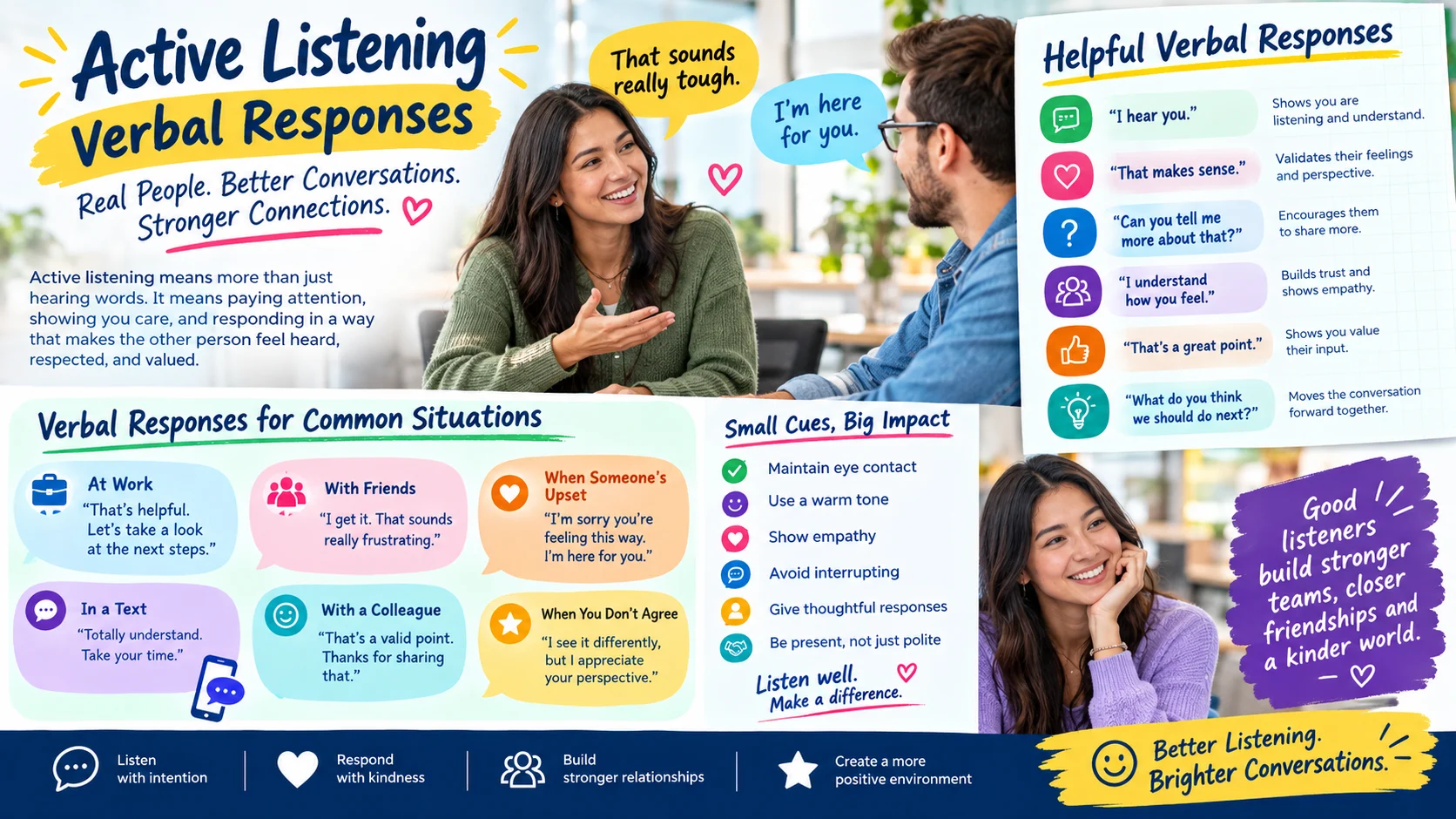
Active listening verbal responses are short replies that show you are paying attention, understanding the speaker, and genuinely engaged in the conversation. Try these natural options: “I hear you,” “That makes sense,” “Tell me more,” “I understand,” “Go on.”
Strong conversations are not just about having something to say. Sometimes, the best response is one that proves you were actually listening.
Whether you are texting a friend, replying in DMs, talking with a crush, helping someone through a rough day, or handling a conversation at work, active listening verbal responses can make your reply feel thoughtful instead of automatic. A simple “I get what you mean” can land much better than a dry “okay.”
The right response also depends on the moment. You might want to sound supportive, funny, professional, warm, curious, or confident. You do not want to respond to someone’s serious story with a joke that belongs in the group chat at 2 a.m.
That is why having different responses ready helps. These examples give you natural ways to acknowledge feelings, encourage someone to continue, clarify what they mean, and keep conversations flowing without sounding scripted.
Supportive Responses
“I hear you.”
Use it when someone needs to feel acknowledged without receiving immediate advice.
Meaning: It shows that you are present and taking their words seriously.
“That sounds really difficult.”
Use it when someone shares a stressful or painful experience.
Meaning: It validates their experience without pretending you know exactly how they feel.
“I can understand why you feel that way.”
Use it when someone’s reaction makes sense based on what they have experienced.
Meaning: It communicates empathy and emotional understanding.
“That makes sense.”
Use it when someone explains a decision, feeling, or concern.
Meaning: It lets them know their perspective is understandable.
“I’m listening.”
Use it when someone seems unsure whether you are fully paying attention.
Meaning: It reassures them that you are engaged.
“You can tell me more.”
Use it when someone seems ready to open up further.
Meaning: It gives them permission to continue sharing.
“I’m glad you told me.”
Use it when someone shares something personal or difficult.
Meaning: It shows appreciation for their trust.
“That sounds like a lot to handle.”
Use it when someone describes several problems happening at once.
Meaning: It recognizes the weight of what they are dealing with.
“I get where you’re coming from.”
Use it when someone explains their side of a disagreement.
Meaning: It shows that you understand their perspective.
“You don’t have to explain everything at once.”
Use it when someone is struggling to organize their thoughts.
Meaning: It creates a relaxed space for them to speak naturally.
“Take your time.”
Use it when someone needs a moment to gather their thoughts.
Meaning: It removes pressure and encourages honest communication.
“I’m here with you.”
Use it when someone needs emotional reassurance.
Meaning: It communicates presence and support.
Curious Responses
“Tell me more about that.”
Use it when someone mentions something interesting or important.
Meaning: It invites them to expand without interrupting their story.
“What happened next?”
Use it when someone is telling you a story with more details to come.
Meaning: It encourages them to continue naturally.
“What made you feel that way?”
Use it when you want to understand the emotion behind someone’s words.
Meaning: It gently explores their perspective.
“What was that like for you?”
Use it when someone describes an emotional or meaningful experience.
Meaning: It shifts attention toward their personal experience.
“What do you mean by that?”
Use it when a statement is unclear or could have several meanings.
Meaning: It asks for clarification instead of making assumptions.
“How did you decide that?”
Use it when someone explains an important choice.
Meaning: It shows interest in their reasoning.
“What part bothered you most?”
Use it when someone describes a frustrating situation.
Meaning: It helps identify the issue that matters most to them.
“Was that what you expected?”
Use it when someone shares an unexpected outcome.
Meaning: It encourages them to reflect on the experience.
“What happened after that?”
Use it when the story seems unfinished.
Meaning: It keeps the conversation moving without taking over.
“What do you think about it now?”
Use it when someone talks about something from the past.
Meaning: It invites reflection on how their perspective has changed.
“Is there more to the story?”
Use it when someone seems to be leaving out important context.
Meaning: It encourages them to share anything they have not mentioned.
“What would you like to happen next?”
Use it when someone is discussing a problem or decision.
Meaning: It focuses the conversation on their desired outcome.
Empathetic Responses
“That must have been hard.”
Use it when someone describes an emotionally challenging moment.
Meaning: It acknowledges the difficulty without minimizing it.
“I can see why that hurt.”
Use it when someone’s feelings are affected by another person’s actions.
Meaning: It validates their emotional reaction.
“You had every reason to feel overwhelmed.”
Use it when someone describes having too much happening at once.
Meaning: It recognizes that their reaction came from real pressure.
“That sounds exhausting.”
Use it when someone talks about a draining situation.
Meaning: It acknowledges the emotional or mental effort involved.
“I can imagine that wasn’t easy.”
Use it when someone shares a difficult experience.
Meaning: It expresses compassion without claiming identical experience.
“It sounds like that really mattered to you.”
Use it when someone talks passionately about an event or relationship.
Meaning: It recognizes the emotional importance behind their words.
“I understand why that stayed with you.”
Use it when someone describes an experience they still remember.
Meaning: It acknowledges the lasting emotional impact.
“That sounds painful.”
Use it when someone shares something deeply upsetting.
Meaning: It offers simple emotional validation.
“I’m sorry you had to deal with that.”
Use it when someone describes an unpleasant situation.
Meaning: It communicates sympathy and care.
“Your feelings make sense.”
Use it when someone questions whether their reaction is reasonable.
Meaning: It reassures them that their emotions deserve consideration.
“I can see why you needed to talk about it.”
Use it when someone finally opens up about a concern.
Meaning: It acknowledges the importance of expressing their feelings.
“You deserved to be heard.”
Use it when someone says they felt ignored or dismissed.
Meaning: It reinforces the value of their voice and experience.
Encouraging Responses
“Keep going, I’m listening.”
Use it when someone hesitates while explaining something.
Meaning: It encourages them to continue without feeling rushed.
“I’m following you.”
Use it when someone is explaining a complicated situation.
Meaning: It reassures them that you understand the direction of their story.
“You’re making sense.”
Use it when someone worries that their explanation is confusing.
Meaning: It gives them confidence to keep explaining.
“Go on.”
Use it when someone pauses before finishing a thought.
Meaning: It invites them to continue.
“I’m with you so far.”
Use it when someone is giving you several details.
Meaning: It shows attention while encouraging them to continue.
“That’s worth talking about.”
Use it when someone raises an important concern.
Meaning: It signals that their topic deserves attention.
“Keep telling me about it.”
Use it when someone seems comfortable sharing more.
Meaning: It creates an open and welcoming conversational space.
“I want to understand.”
Use it when someone’s perspective is unfamiliar to you.
Meaning: It communicates genuine curiosity instead of judgment.
“You have my attention.”
Use it when someone needs reassurance that you are focused.
Meaning: It emphasizes that you are actively engaged.
“I’m not going anywhere.”
Use it when someone needs time to explain something emotional.
Meaning: It provides reassurance and patience.
“Take your time, I’m following.”
Use it when someone is struggling to explain themselves.
Meaning: It combines patience with active attention.
“You can finish your thought.”
Use it when someone gets interrupted or loses their place.
Meaning: It gives them room to complete what they wanted to say.
Clarifying Responses
“So, if I understand correctly…”
Use it when you want to confirm the main point of a complicated explanation.
Meaning: It checks your understanding before you respond.
“Do you mean that…?”
Use it when a statement could have multiple interpretations.
Meaning: It politely asks the speaker to clarify.
“Let me make sure I’ve got this right.”
Use it when details matter and you want to avoid misunderstanding.
Meaning: It demonstrates careful listening.
“Are you saying that you felt ignored?”
Use it when you want to confirm an emotional point.
Meaning: It checks whether you correctly understood their feelings.
“When you say ‘that,’ what do you mean?”
Use it when someone uses a vague reference.
Meaning: It asks for specific context.
“Which part are you most concerned about?”
Use it when someone raises several issues at once.
Meaning: It helps identify their main concern.
“Did I understand that correctly?”
Use it after summarizing someone’s point.
Meaning: It gives them a chance to correct your understanding.
“Can you explain that part a little more?”
Use it when one detail is unclear.
Meaning: It requests additional information without sounding critical.
“Is that how you saw it?”
Use it when discussing different perspectives.
Meaning: It checks their viewpoint without assuming it.
“Are you looking for advice or just someone to listen to?”
Use it when someone shares a personal problem.
Meaning: It clarifies what kind of support they want.
“What’s the main thing you want me to understand?”
Use it when someone gives a long explanation.
Meaning: It helps identify the central message.
“Did I miss anything important?”
Use it after someone explains a situation.
Meaning: It shows that you want a complete understanding.
Reassuring Responses
“You’re not talking to yourself.”
Use it when someone worries that nobody is paying attention.
Meaning: It reassures them that their words are being heard.
“I’m paying attention.”
Use it when someone asks whether you are listening.
Meaning: It directly confirms your engagement.
“You don’t have to repeat yourself.”
Use it when someone expects you to forget what they said.
Meaning: It reassures them that you remember the important details.
“I remember you mentioning that.”
Use it when someone refers back to an earlier conversation.
Meaning: It proves that you noticed and retained what they shared.
“I haven’t forgotten.”
Use it when someone worries their concern is overlooked.
Meaning: It communicates that their words still matter to you.
“I understand what you’re saying.”
Use it when someone wants confirmation that their point landed.
Meaning: It signals clear comprehension.
“You have my full attention.”
Use it during an important or serious conversation.
Meaning: It emphasizes focused listening.
“I’m taking you seriously.”
Use it when someone fears being dismissed.
Meaning: It communicates respect for their concerns.
“I’m hearing you.”
Use it when someone needs acknowledgment more than advice.
Meaning: It shows emotional presence.
“You don’t need to convince me that it matters.”
Use it when someone feels pressured to justify their feelings.
Meaning: It reassures them that you recognize the importance of the issue.
“I’ve got you.”
Use it when someone needs brief emotional reassurance.
Meaning: It communicates support and reliability.
“You’re safe to say it.”
Use it when someone seems nervous about opening up.
Meaning: It encourages honest expression without pressure.
Professional Responses
“I understand your concern.”
Use it during workplace discussions about problems or disagreements.
Meaning: It acknowledges the concern without automatically agreeing with every conclusion.
“That’s a helpful perspective.”
Use it when a colleague offers a useful viewpoint.
Meaning: It shows appreciation for their contribution.
“I see what you’re saying.”
Use it during meetings when someone explains their position.
Meaning: It demonstrates that you have understood their point.
“Let me reflect that back.”
Use it when summarizing someone’s main point during a professional discussion.
Meaning: It confirms shared understanding.
“That’s an important point.”
Use it when someone raises an issue that deserves attention.
Meaning: It signals that their contribution has been noticed.
“I appreciate you explaining that.”
Use it when someone provides detailed context.
Meaning: It expresses professional respect for their effort.
“I understand the reasoning behind that.”
Use it when discussing a decision or proposal.
Meaning: It acknowledges the logic without necessarily agreeing.
“Could you clarify that last point?”
Use it when a workplace explanation needs more detail.
Meaning: It requests clarification politely.
“I want to make sure we’re aligned.”
Use it when confirming expectations with coworkers.
Meaning: It focuses on shared understanding.
“That gives me useful context.”
Use it when someone explains background information.
Meaning: It shows that their explanation improved your understanding.
“I’ll take that into consideration.”
Use it when someone offers feedback or a suggestion.
Meaning: It acknowledges their input without promising a specific action.
“Thanks for raising that.”
Use it when someone points out a concern during a meeting.
Meaning: It recognizes their willingness to speak up.
Casual Responses
“Yeah, I get you.”
Use it when a friend explains something in everyday conversation.
Meaning: It shows relaxed understanding.
“I feel you.”
Use it when someone describes a relatable frustration.
Meaning: It communicates casual empathy.
“Totally get it.”
Use it when you quickly want to acknowledge someone’s perspective.
Meaning: It shows agreement with the emotional point.
“That tracks.”
Use it when someone’s explanation makes logical sense.
Meaning: It means their story or reasoning adds up.
“Makes sense to me.”
Use it when someone explains a choice or reaction.
Meaning: It communicates straightforward understanding.
“I’m following.”
Use it when someone is telling a longer story.
Meaning: It lets them know you are keeping up.
“Yep, I hear you.”
Use it when a friend needs quick acknowledgment.
Meaning: It combines casual warmth with attention.
“Gotcha.”
Use it when someone explains something simple or clears up confusion.
Meaning: It signals that you understand.
“Okay, I see it now.”
Use it when someone has helped you understand their perspective.
Meaning: It shows that their explanation worked.
“Fair point.”
Use it when someone makes a reasonable observation.
Meaning: It acknowledges the strength of their point.
“Yeah, that makes sense.”
Use it when someone’s feelings or reasoning are understandable.
Meaning: It provides simple conversational validation.
“I’m with you.”
Use it when you want to show support during a casual conversation.
Meaning: It communicates that you understand and support their perspective.
Friendly Responses
“I’m glad you shared that with me.”
Use it when a friend trusts you with something personal.
Meaning: It shows appreciation for their openness.
“Thanks for telling me.”
Use it after someone shares something important.
Meaning: It acknowledges their willingness to open up.
“I really hear what you’re saying.”
Use it when a friend needs more than a quick acknowledgment.
Meaning: It emphasizes genuine attention.
“That actually helps me understand.”
Use it when someone explains their perspective clearly.
Meaning: It shows that their explanation changed or improved your understanding.
“I appreciate you being honest.”
Use it when someone shares an uncomfortable truth.
Meaning: It rewards openness with respect.
“That means a lot that you told me.”
Use it when someone shares something deeply personal.
Meaning: It communicates that their trust matters.
“I’m happy you felt comfortable telling me.”
Use it when someone opens up about something sensitive.
Meaning: It creates emotional safety and warmth.
“You can always talk to me.”
Use it when a friend needs reassurance that they can return to the topic.
Meaning: It offers continued support.
“I’m really listening.”
Use it when someone needs to know that you are fully present.
Meaning: It reinforces focused attention.
“I’m glad we’re talking about this.”
Use it when an important issue finally comes up.
Meaning: It shows that the conversation matters to you.
“I get why you wanted to share that.”
Use it when someone explains something they have been holding in.
Meaning: It validates their need to talk.
“You don’t have to filter yourself with me.”
Use it when a close friend feels nervous about being honest.
Meaning: It encourages authentic communication.
Flirty Responses
“I like hearing you talk.”
Use it when you genuinely enjoy someone’s stories or opinions.
Meaning: It adds subtle romantic interest while showing attention.
“Okay, you officially have my attention.”
Use it when a crush says something intriguing.
Meaning: It playfully signals interest.
“Keep talking, I’m enjoying this.”
Use it when you want to encourage a crush to continue.
Meaning: It combines active listening with gentle flirtation.
“I could listen to you all day.”
Use it when the conversation has a warm romantic vibe.
Meaning: It expresses strong interest in their presence.
“You’re actually really interesting.”
Use it when someone shares something that makes you curious about them.
Meaning: It compliments their personality rather than just their appearance.
“Now I want the full story.”
Use it when a crush hints at an interesting experience.
Meaning: It playfully shows curiosity and attention.
“I’m listening very carefully now.”
Use it after someone says something intriguing.
Meaning: It creates playful romantic tension.
“You have my undivided attention.”
Use it when the conversation becomes personal or flirty.
Meaning: It signals focused interest.
“I like this side of you.”
Use it when someone opens up emotionally.
Meaning: It shows appreciation for their vulnerability.
“You’re making it hard not to be curious.”
Use it when someone gives you an intriguing detail.
Meaning: It adds playful curiosity with a flirtatious edge.
“I’m definitely not bored.”
Use it when someone jokes that their story is too long.
Meaning: It reassures them while adding playful interest.
“Okay, I’m invested now.”
Use it when their story has genuinely captured your attention.
Meaning: It shows enthusiastic interest in both the story and the person.
Funny Responses
“Proceed, I have snacks.”
Use it when a friend starts telling a long and entertaining story.
Meaning: It humorously signals that you are ready to listen.
“I’m seated.”
Use it when someone begins explaining dramatic or interesting news.
Meaning: It playfully means you are fully invested.
“The floor is yours.”
Use it when someone needs space to explain themselves.
Meaning: It gives them permission to speak while keeping things light.
“I have entered listening mode.”
Use it when a friend begins an important story.
Meaning: It jokingly announces your full attention.
“Say less, I’m listening.”
Use it when someone starts explaining something intriguing.
Meaning: It playfully shows immediate interest.
“Okay, story time has officially begun.”
Use it when someone launches into a detailed story.
Meaning: It makes the moment feel fun rather than formal.
“My ears are clocked in.”
Use it when someone wants to tell you something important.
Meaning: It humorously says that you are paying attention.
“I’m all ears and approximately zero distractions.”
Use it when someone needs your full attention.
Meaning: It combines reassurance with playful humor.
“You have the microphone.”
Use it when giving someone space to explain their side.
Meaning: It signals that you are letting them take the lead.
“I’m listening like this is premium content.”
Use it when a friend’s story becomes especially interesting.
Meaning: It humorously communicates strong attention.
“Okay, I’m emotionally subscribed.”
Use it when you become invested in someone’s story.
Meaning: It jokingly shows that you care about what happens next.
“Continue, detective mode is activated.”
Use it when someone is explaining a confusing situation.
Meaning: It adds humor while showing genuine curiosity.
Sarcastic Responses
“Wow, look at me actually listening.”
Use it when joking with a close friend about your attention span.
Meaning: It playfully exaggerates your focus.
“I’m listening, surprisingly.”
Use it when you want to make fun of your usual distracted habits.
Meaning: It humorously emphasizes that you are paying attention.
“Go ahead, I promise not to interrupt.”
Use it when teasing someone about frequent interruptions.
Meaning: It jokingly signals that they have the floor.
“You have my attention. Use it wisely.”
Use it when a friend starts telling an interesting story.
Meaning: It turns active listening into playful banter.
“I’m taking notes in my imaginary notebook.”
Use it when someone gives you a detailed explanation.
Meaning: It humorously communicates that you are paying attention.
“Okay, I’m listening with both ears today.”
Use it when joking about being distracted.
Meaning: It playfully promises focused attention.
“You’ve officially passed the attention test.”
Use it when someone has said something genuinely interesting.
Meaning: It humorously admits that they captured your focus.
“Fine, you have my attention.”
Use it when someone says something intriguing.
Meaning: It communicates interest with a playful attitude.
“I’m listening, believe it or not.”
Use it when someone doubts whether you are paying attention.
Meaning: It reassures them while keeping the mood light.
“Okay, that got interesting fast.”
Use it when a conversation suddenly becomes compelling.
Meaning: It signals increased curiosity.
“I’m surprisingly invested in this.”
Use it when a story becomes more interesting than expected.
Meaning: It humorously admits genuine engagement.
“Continue before my attention span changes its mind.”
Use it with a friend during a long story.
Meaning: It playfully encourages them to keep going.
Creative Responses
“I’m catching the meaning behind your words.”
Use it when someone is expressing something deeper than the literal statement.
Meaning: It shows attention to both words and emotions.
“I’m following the thread.”
Use it when someone is explaining a complicated story.
Meaning: It signals that you are tracking their ideas.
“That gives me a clearer picture.”
Use it when someone provides useful context.
Meaning: It shows that their explanation improved your understanding.
“I’m connecting the dots.”
Use it when several details begin to make sense together.
Meaning: It communicates thoughtful attention.
“I see the bigger picture now.”
Use it when someone explains the context behind an issue.
Meaning: It shows that you understand more than one isolated detail.
“That adds a new layer to it.”
Use it when someone reveals additional context.
Meaning: It recognizes that their new information changes the picture.
“I’m picking up what you’re putting down.”
Use it when someone communicates an idea indirectly.
Meaning: It casually confirms that you understand the message.
“That paints a clearer picture.”
Use it when someone explains a situation in greater detail.
Meaning: It acknowledges that the explanation helped.
“I’m with you on the storyline.”
Use it when a friend tells a long personal story.
Meaning: It humorously communicates that you are following along.
“That puts your reaction into perspective.”
Use it when a new context explains someone’s emotional response.
Meaning: It shows that you now understand their reaction better.
“I’m seeing where this is going.”
Use it when the speaker is building toward a point.
Meaning: It confirms that you are following their reasoning.
“That actually connects a few things for me.”
Use it when new information explains earlier details.
Meaning: It communicates thoughtful understanding.
Confident Responses
“I understand your point.”
Use it when you want to acknowledge someone’s argument clearly.
Meaning: It demonstrates confidence without unnecessary agreement.
“I hear what you’re saying.”
Use it when discussing different opinions.
Meaning: It shows that you can listen without becoming defensive.
“That’s clear.”
Use it when someone has explained their position successfully.
Meaning: It confirms that you understand.
“I see your perspective.”
Use it when someone presents an opinion different from yours.
Meaning: It acknowledges their viewpoint respectfully.
“That’s a fair perspective.”
Use it when someone’s position has reasonable grounds.
Meaning: It recognizes their viewpoint without surrendering your own.
“I understand where you’re coming from.”
Use it during a disagreement that needs calm communication.
Meaning: It signals perspective-taking and emotional control.
“I’ve got the point.”
Use it when someone has finished explaining something.
Meaning: It confirms that their message landed.
“That gives me enough context.”
Use it when you have received the information needed to respond.
Meaning: It signals clear understanding.
“I’m clear on what you mean.”
Use it when you want to eliminate uncertainty.
Meaning: It communicates confident comprehension.
“I respect your perspective.”
Use it when discussing a difference of opinion.
Meaning: It acknowledges their viewpoint while maintaining boundaries.
“I understand the concern.”
Use it when someone raises an issue directly.
Meaning: It shows that you are taking their concern seriously.
“I hear you, and I’ll think about that.”
Use it when you need time before giving a final response.
Meaning: It acknowledges their point without rushing your decision.
Emotional Responses
“That really got to you.”
Use it when someone describes an event that affected them deeply.
Meaning: It recognizes the emotional impact of the experience.
“I can tell this matters to you.”
Use it when someone’s emotions are obvious in their story.
Meaning: It acknowledges the importance of the topic.
“You’ve been carrying that for a while.”
Use it when someone reveals a long-standing concern.
Meaning: It recognizes the emotional weight they have been holding.
“That clearly meant something to you.”
Use it when someone describes a meaningful experience.
Meaning: It validates the emotional significance of the event.
“I can hear how much this means to you.”
Use it when someone’s feelings are especially strong.
Meaning: It reflects the emotion behind their words.
“You sound relieved.”
Use it when someone describes something that finally worked out.
Meaning: It identifies the emotion you hear in their voice.
“You sound frustrated.”
Use it when someone’s words suggest irritation or disappointment.
Meaning: It reflects their emotional state without judging it.
“That must have stayed on your mind.”
Use it when someone keeps returning to the same experience.
Meaning: It recognizes that the event had lasting significance.
“I can tell you really care about this.”
Use it when someone speaks passionately about a topic.
Meaning: It acknowledges their emotional investment.
“That sounds like it hit differently.”
Use it when an experience has an unexpectedly strong emotional effect.
Meaning: It recognizes a deeper emotional reaction.
“You seem really affected by that.”
Use it when someone’s emotions are clear.
Meaning: It gently acknowledges the impact without assuming the exact feeling.
“I’m glad you’re letting it out.”
Use it when someone finally expresses emotions they have been holding back.
Meaning: It encourages healthy emotional expression and openness.
Sweet Responses
“I’m always happy to listen.”
Use it when someone thanks you for hearing them out.
Meaning: It communicates genuine care and availability.
“You matter to me.”
Use it when someone doubts whether their feelings are important.
Meaning: It directly communicates personal care.
“I’m glad you trusted me with that.”
Use it when someone shares something private.
Meaning: It shows that you value their trust.
“I’m right here.”
Use it when someone needs emotional reassurance.
Meaning: It offers simple, warm support.
“You never have to feel silly for telling me.”
Use it when someone worries that their feelings sound insignificant.
Meaning: It creates a judgment-free space.
“I care about what you’re saying.”
Use it when someone questions whether their concerns matter.
Meaning: It directly communicates attention and care.
“I’m really glad you told me.”
Use it when someone finally opens up.
Meaning: It reinforces that sharing was worthwhile.
“You deserve to be heard.”
Use it when someone says they feel ignored.
Meaning: It affirms their right to express themselves.
“I’m listening because I care.”
Use it when someone wonders why you are giving them your time.
Meaning: It connects your attention with genuine affection.
“You can take all the time you need.”
Use it when someone needs a slower conversation.
Meaning: It communicates patience and acceptance.
“I’ve got time for you.”
Use it when someone apologizes for taking up your time.
Meaning: It reassures them that their conversation is welcome.
“I’m really glad we talked.”
Use it after a meaningful conversation ends.
Meaning: It shows appreciation for the connection created through honest communication.
Clever Responses
“So the real issue is…”
Use it when you want to summarize the central concern.
Meaning: It helps move the conversation toward the main point.
“If I’m hearing you correctly…”
Use it when confirming a nuanced idea.
Meaning: It demonstrates careful listening before responding.
“That changes how I see the situation.”
Use it when new information affects your understanding.
Meaning: It shows that you genuinely considered what was said.
“That’s an important distinction.”
Use it when someone separates two ideas that could easily be confused.
Meaning: It shows attention to detail.
“I hadn’t looked at it that way.”
Use it when someone gives you a perspective you had not considered.
Meaning: It demonstrates openness to another viewpoint.
“That explains a lot.”
Use it when new information clarifies previous confusion.
Meaning: It shows that their explanation connected the missing pieces.
“Now I understand the connection.”
Use it when someone explains how two things relate.
Meaning: It confirms that the reasoning has become clear.
“That puts the earlier part into context.”
Use it when later details explain something previously confusing.
Meaning: It shows that you are tracking the entire conversation.
“I think I understand the bigger concern.”
Use it when someone describes several surface-level problems.
Meaning: It identifies the deeper issue without dismissing the details.
“That’s an interesting way to frame it.”
Use it when someone presents an unusual perspective.
Meaning: It acknowledges their approach and invites further discussion.
“That gives me something to think about.”
Use it when someone’s words challenge your existing perspective.
Meaning: It shows that you are taking their point seriously.
“I see the connection now.”
Use it when an explanation finally makes a complicated situation clear.
Meaning: It confirms that the information has clicked.
Respectful Responses
“Thank you for sharing that.”
Use it when someone discusses something personal or meaningful.
Meaning: It communicates appreciation for their openness.
“I respect what you’re saying.”
Use it when someone expresses an opinion different from yours.
Meaning: It acknowledges their right to their perspective.
“I appreciate your honesty.”
Use it when someone speaks openly about a difficult subject.
Meaning: It encourages sincere communication.
“I understand your position.”
Use it when discussing a disagreement respectfully.
Meaning: It shows that you have listened before responding.
“That’s important for me to understand.”
Use it when someone explains a concern that affects your relationship or work.
Meaning: It communicates that their perspective matters.
“I appreciate the context.”
Use it when someone explains background information.
Meaning: It recognizes the value of their explanation.
“I’m glad you brought this up.”
Use it when someone raises a difficult topic.
Meaning: It creates space for honest discussion.
“I hear your concern.”
Use it when someone needs acknowledgment during a serious discussion.
Meaning: It shows that their concern has been received.
“Thank you for being direct with me.”
Use it when someone gives straightforward feedback.
Meaning: It values honesty and clear communication.
“I can respect that perspective.”
Use it when you disagree but want to remain constructive.
Meaning: It acknowledges their viewpoint without pretending to agree.
“I understand why you see it that way.”
Use it when explaining different perspectives during a disagreement.
Meaning: It shows that you can recognize their reasoning.
“I appreciate you explaining your side.”
Use it when someone gives their perspective on a conflict.
Meaning: It shows respect for their willingness to communicate.
Calm Responses
“Let’s take this one step at a time.”
Use it when a conversation becomes overwhelming.
Meaning: It slows the discussion and creates room for clarity.
“I’m listening, no rush.”
Use it when someone feels pressured to explain quickly.
Meaning: It communicates patience.
“We can talk through it.”
Use it when someone is dealing with a complicated issue.
Meaning: It offers calm support without rushing toward a solution.
“Let’s make sure I understand first.”
Use it when emotions are high and assumptions could cause conflict.
Meaning: It prioritizes understanding before reacting.
“Take a breath and start wherever you want.”
Use it when someone struggles to explain an emotional situation.
Meaning: It creates a calmer environment for communication.
“I’m here, and I’m listening.”
Use it when someone needs steady reassurance.
Meaning: It combines emotional presence with attention.
“We don’t have to solve everything right now.”
Use it when someone feels overwhelmed by a problem.
Meaning: It removes pressure to reach an immediate solution.
“Let’s slow this down.”
Use it when a discussion becomes rushed or heated.
Meaning: It encourages more thoughtful communication.
“I want to understand before I respond.”
Use it when a serious conversation requires careful attention.
Meaning: It shows emotional maturity and restraint.
“There’s no need to rush this conversation.”
Use it when someone is nervous about explaining themselves.
Meaning: It gives them permission to speak at their own pace.
“I’m listening without judging.”
Use it when someone worries about being criticized.
Meaning: It creates a more comfortable space for honesty.
“We can figure out what this means together.”
Use it when a situation feels confusing or uncertain.
Meaning: It offers calm collaboration instead of immediate conclusions.
Warm And Natural Responses
“Yeah, I get what you mean.”
Use it when someone explains a familiar feeling or situation.
Meaning: It provides natural conversational validation.
“I hear what you’re saying.”
Use it when someone wants acknowledgement before advice.
Meaning: It shows that their message has reached you.
“That makes a lot more sense now.”
Use it after someone gives additional context.
Meaning: It confirms that their explanation cleared up confusion.
“I can see that.”
Use it when someone’s perspective becomes clear through their explanation.
Meaning: It communicates understanding without overexplaining.
“Thanks for explaining that.”
Use it when someone takes time to clarify their thoughts.
Meaning: It shows appreciation for their effort.
“I hadn’t thought about it that way.”
Use it when someone offers a perspective you had not considered.
Meaning: It demonstrates openness and genuine attention.
“I see why you’d feel that way.”
Use it when someone’s emotional reaction becomes understandable.
Meaning: It validates the reasoning behind their feelings.
“That actually helps me understand you better.”
Use it when someone explains a personal viewpoint.
Meaning: It shows that listening has strengthened understanding.
“I’m glad you told me.”
Use it when someone shares something they were hesitant to say.
Meaning: It communicates appreciation for their honesty.
“I’m following you.”
Use it when someone is explaining a situation with several details.
Meaning: It reassures them that you are keeping up.
“I get where you’re coming from.”
Use it when someone explains their perspective during a disagreement.
Meaning: It shows that you understand their viewpoint.
“That’s actually helpful to know.”
Use it when someone provides information that changes your understanding.
Meaning: It acknowledges the usefulness of what they shared.
FAQS
What do active listening verbal responses mean? Active listening verbal responses are short statements that show you are paying attention, understanding the speaker, and responding to what they actually said.
What are good active listening responses for emotional conversations? “I hear you,” “That sounds difficult,” “I understand why you feel that way,” and “I’m glad you told me” are warm options that acknowledge emotions without immediately trying to fix everything.
Can active listening responses sound flirty? Yes. In romantic conversations, responses such as “I like hearing you talk,” “Keep talking, I’m enjoying this,” and “You have my full attention” can show interest while still focusing on what the other person is saying.
What are professional active listening responses? Try “I understand your concern,” “That’s an important point,” “Could you clarify that?” or “I want to make sure we’re aligned.” These sound respectful and appropriate for workplace conversations.
What should you say when you do not actually know what to say? Keep it simple. “I’m listening,” “That makes sense,” “Tell me more,” or “I’m not sure what to say, but I’m here” can feel more genuine than forcing an elaborate response.
Is humor appropriate when practicing active listening? Humor can work when the situation is casual and the relationship supports it. For serious conversations, start with empathy and attention before adding jokes.
Conclusion
Good conversations are rarely about having the perfect comeback every time. Sometimes, the most memorable response is simply one that makes another person feel heard.
The best active listening verbal responses give conversations room to breathe. They can show empathy, curiosity, confidence, humor, affection, or respect without turning the moment into a speech. Try different styles depending on who you are talking to and what the situation needs.
Save your favorite responses for your next text, DM, meeting, or heart-to-heart. Mix them with your own personality, keep them natural, and do not be afraid to keep things simple.
A little genuine attention can go a surprisingly long way. Share, save, and reuse these responses whenever your conversation needs a smoother flow.