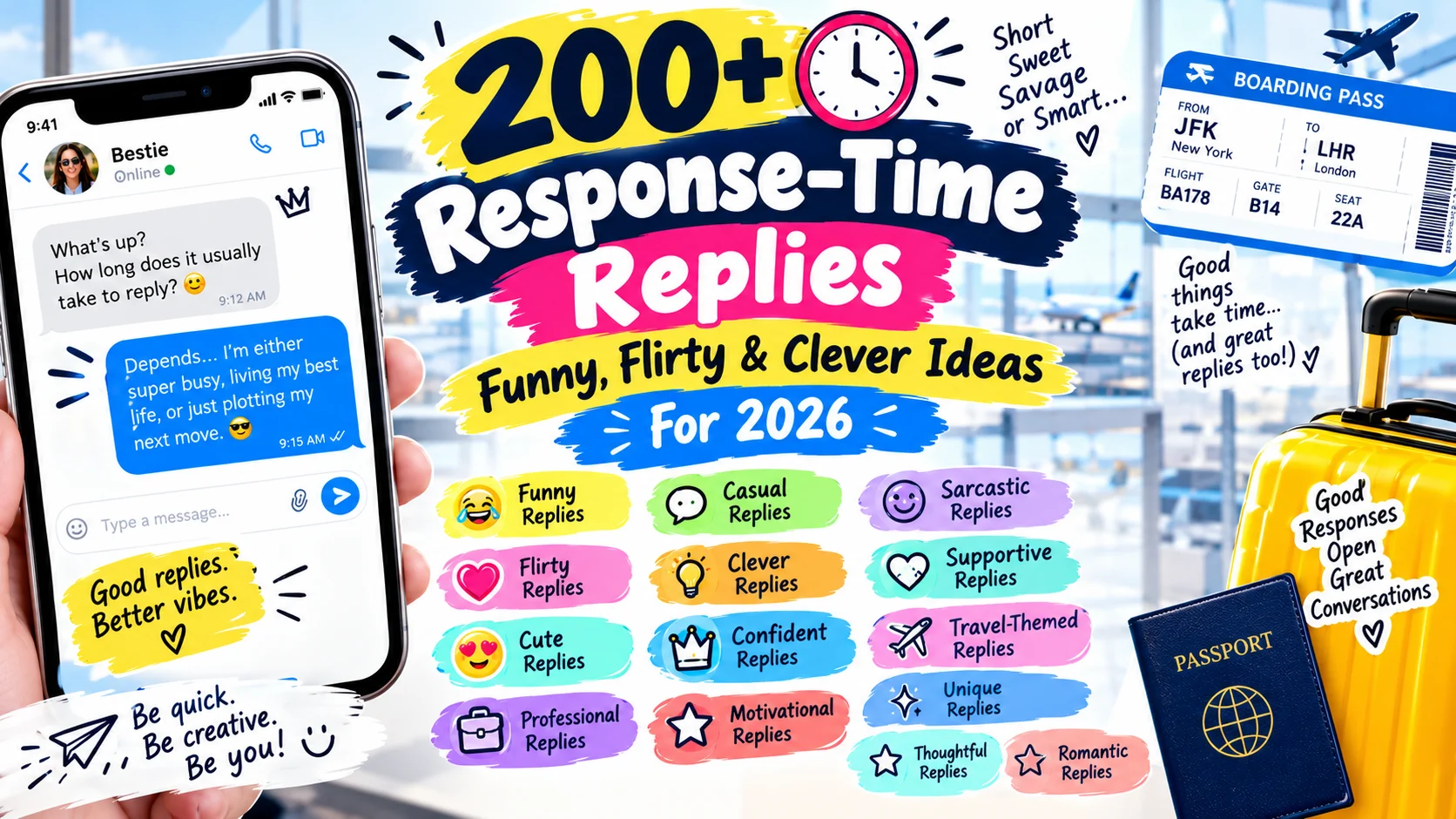
If someone comments on your response-time, the best reply depends on your mood and the situation. Try these ready-to-send options: “I reply when the universe permits,” “Better late than never,” “I was crafting a masterpiece,” “My notifications betrayed me,” “I’m here now.”
Ever opened a message three business days later and wondered how to explain your response-time without writing an entire apology essay? We have all been there. Whether it happens in texts, DMs, group chats, work messages, or conversations with a crush, response time can say a lot without saying a word. Sometimes you were busy. Sometimes you forget. Sometimes you saw the notification, mentally replied, and somehow never actually typed anything. Your response can turn an awkward delay into a funny moment, a confident comeback, or a genuinely thoughtful message. The right response also depends on who is asking and why. A friend might deserve humor, while a coworker may need something professional. So, instead of panicking over that unread notification, pick a reply that actually sounds like you.
Funny Responses About Response-Time
“I reply when the universe permits.”
Use it when you want to turn a delayed reply into a playful excuse.
Meaning: You are joking about being slow to respond.
“My response time has entered a different time zone.”
Use it when your reply is hilariously late.
Meaning: You are exaggerating the delay for humor.
“I was buffering.”
Use it when someone jokingly calls out your slow response.
Meaning: You are comparing yourself to a slow internet connection.
“Sorry, my brain needed an update.”
Use it after taking too long to answer something simple.
Meaning: You needed extra time to process the message.
“I saw it in another lifetime.”
Use it when replying extremely late.
Meaning: You are playfully admitting the delay was significant.
“My notifications chose violence.”
Use it when you genuinely miss someone’s message.
Meaning: You are blaming notification chaos in a humorous way.
“I was busy being mysteriously unavailable.”
Use it with close friends who understand your humor.
Meaning: You are making fun of your own disappearance.
“The reply was loading, trust me.”
Use it when someone asks why you took so long.
Meaning: You are joking that your response was delayed.
“I wanted to make an entrance.”
Use it when your late reply feels dramatically timed.
Meaning: You intentionally frame the delay as theatrical.
“My fingers were on vacation.”
Use it for a silly explanation after a late response.
Meaning: You are playfully blaming your inability to type.
“I was waiting for the perfect moment.”
Use it when a friend teases you about your timing.
Meaning: You are pretending the delay was deliberate.
“And here I am, right on schedule.”
Use it when your response is obviously late.
Meaning: You are sarcastically pretending your timing was perfect.
Brutal Responses About Response-Time
“At least I replied.”
Use it when someone keeps complaining about your timing.
Meaning: You are confidently pointing out that you eventually responded.
“Patience builds character.”
Use it when someone jokingly complains about waiting.
Meaning: You are teasing them for being impatient.
“You survived the wait.”
Use it when the delay is noticeable but harmless.
Meaning: You are playfully minimizing their complaint.
“The wait was part of the experience.”
Use it when you want a confident, cheeky response.
Meaning: You are joking that your delayed reply added drama.
“Good things take time.”
Use it when someone complains about your slow response.
Meaning: You are humorously comparing your reply to something valuable.
“You got your answer eventually.”
Use it when someone is being overly demanding.
Meaning: You are calmly emphasizing that you did respond.
“I’m not a 24-hour customer service desk.”
Use it when someone expects instant replies.
Meaning: You are setting a boundary around your availability.
“Instant replies aren’t included in my subscription.”
Use it with friends who expect immediate answers.
Meaning: You are joking about having limited availability.
“You wanted fast, I delivered eventually.”
Use it when teasing someone about their expectations.
Meaning: You acknowledge the delay without apologizing heavily.
“My schedule doesn’t revolve around notifications.”
Use it when someone expects constant availability.
Meaning: You are confidently protecting your personal time.
“Waiting builds suspense.”
Use it when the delayed response creates unnecessary anticipation.
Meaning: You are turning the delay into playful drama.
“Consider it a lesson in patience.”
Use it with someone who is jokingly impatient.
Meaning: You are teasing them about waiting.
Flirty Responses About Response-Time
“I wanted to keep you wondering about me.”
Use it when flirting with someone who noticed your delay.
Meaning: You are turning the wait into playful romantic tension.
“Maybe I was waiting for you to miss me.”
Use it when you want a warm, teasing comeback.
Meaning: You suggest the delay made them think about you.
“Worth the wait, though, right?”
Use it when the conversation has obvious chemistry.
Meaning: You are confidently making the delayed reply part of the flirtation.
“I had to make you earn the notification.”
Use it with someone who enjoys playful teasing.
Meaning: You are joking that your attention is something to earn.
“I reply faster when I like someone.”
Use it when you want to flirt without being too serious.
Meaning: You are hinting that their importance affects your response time.
“Guess you caught me thinking about you.”
Use it when the conversation already feels romantic.
Meaning: You are turning the delay into a flirtatious confession.
“I was choosing the right words for you.”
Use it when you want your late response to sound thoughtful.
Meaning: You imply that they deserve extra attention.
“You’re worth the typing time.”
Use it when responding warmly to a crush.
Meaning: You are saying the person is worth your effort.
“I got distracted by how cute this conversation is.”
Use it when the chat is already playful.
Meaning: You are adding a direct romantic compliment.
“I wanted my reply to have main-character timing.”
Use it when flirting with someone who likes internet humor.
Meaning: You are playfully making your timing feel intentional.
“I’m here now, flirting responsibly.”
Use it when returning to a fun conversation.
Meaning: You are inviting continued flirting.
“Sorry for the wait, cutie.”
Use it when you want something short and openly affectionate.
Meaning: You acknowledge the delay while keeping the mood romantic.
Polite Responses About Response-Time
“Sorry for the delayed response.”
Use it when you genuinely need to acknowledge a late reply.
Meaning: You are politely recognizing the delay.
“Thanks for your patience.”
Use it when someone has been waiting for your answer.
Meaning: You appreciate their understanding.
“Apologies for getting back to you late.”
Use it when a slightly formal apology is appropriate.
Meaning: You are taking responsibility for the delayed response.
“I appreciate you waiting for my reply.”
Use it when someone has patiently waited.
Meaning: You are showing gratitude for their patience.
“I just had a chance to respond.”
Use it when you want to explain the delay without oversharing.
Meaning: You were unavailable earlier.
“Thank you for understanding.”
Use it when your response is delayed because of circumstances.
Meaning: You value their flexibility.
“I’m sorry I missed your message earlier.”
Use it when you genuinely overlooked the message.
Meaning: You acknowledge that you did not respond promptly.
“Thanks for following up.”
Use it when someone sends a reminder.
Meaning: You appreciate the follow-up and are ready to respond.
“I appreciate your patience while I got back to you.”
Use it for a thoughtful and respectful response.
Meaning: You recognize the time they spent waiting.
“I’m glad I can respond now.”
Use it when you finally have enough time to answer properly.
Meaning: You are ready to engage fully.
“Thank you for giving me time to respond.”
Use it when you need extra time for a meaningful answer.
Meaning: You appreciate their patience.
“I hope the delay didn’t cause any inconvenience.”
Use it when your late response may have affected someone.
Meaning: You are showing consideration for the impact of the delay.
Professional Responses About Response-Time
“Thank you for your patience.”
Use it when replying to a client, coworker, or professional contact.
Meaning: You politely acknowledge the waiting period.
“Apologies for the delayed response.”
Use it when professional communication requires accountability.
Meaning: You recognize that your reply was late.
“Thank you for following up on this.”
Use it after receiving a reminder about an outstanding message.
Meaning: You acknowledge their follow-up professionally.
“I appreciate your patience while I reviewed this.”
Use it when you need time to check information.
Meaning: You explain the delay in a professional way.
“I’m following up now with the requested information.”
Use it when returning to a delayed work conversation.
Meaning: You are moving the matter forward.
“Thank you for allowing me time to look into this.”
Use it when a question requires research or consideration.
Meaning: You appreciate their patience while you investigate.
“I apologize for not responding sooner.”
Use it when a timely response is expected.
Meaning: You accept responsibility for the delay.
“I’ve reviewed your message and can respond now.”
Use it when you finally have the necessary information.
Meaning: You are ready to address the request.
“Thank you for your understanding regarding the delay.”
Use it when circumstances prevent a quick response.
Meaning: You appreciate their flexibility.
“I’m sorry for the inconvenience caused by the delayed response.”
Use it when your timing affects someone else’s work.
Meaning: You acknowledge the practical impact of the delay.
“I appreciate the reminder.”
Use it when someone professionally follows up.
Meaning: You accept the reminder without unnecessary explanation.
“I’m available to discuss this further now.”
Use it when a delayed response needs to move into a productive conversation.
Meaning: You are signaling that you are ready to continue.
Creative Responses About Response-Time
“My reply took the scenic route.”
Use it when you want a creative way to explain a delay.
Meaning: Your response took longer than expected.
“This message traveled through several dimensions first.”
Use it with someone who enjoys imaginative humor.
Meaning: You are exaggerating how long the reply took.
“My response arrived fashionably late.”
Use it when the delay is harmless and funny.
Meaning: You are playfully describing the late reply.
“The reply finally escaped my drafts.”
Use it when you repeatedly typed and abandoned the message.
Meaning: You struggled to actually send the response.
“My notification summoned me at last.”
Use it when you finally notice a message.
Meaning: You are joking about discovering the notification late.
“This reply completed its character arc.”
Use it when a message takes an unusually long time to answer.
Meaning: You are making the delay sound like a story.
“The reply was worth the plot development.”
Use it when the conversation is already humorous.
Meaning: You turn the delay into playful storytelling.
“My response took the long way home.”
Use it when your answer is very late.
Meaning: You are humorously describing the slow journey of your reply.
“The typing spirits finally returned.”
Use it when you disappear and then suddenly respond.
Meaning: You are joking about finally feeling ready to type.
“My reply clock needed a little creativity.”
Use it when someone notices unusual timing.
Meaning: You are playfully avoiding a serious explanation.
“Delayed, but delivered with style.”
Use it when you want a confident creative comeback.
Meaning: You admit the delay while keeping the mood positive.
“Better late with personality.”
Use it when you want a short, memorable response.
Meaning: You believe personality matters more than perfect timing.
Sarcastic Responses About Response-Time
“Sorry, should I have replied before you sent it?”
Use it when someone dramatically complains about your timing.
Meaning: You are teasing them about unrealistic expectations.
“Breaking news: I finally replied.”
Use it when the delay has become a running joke.
Meaning: You exaggerate the importance of your response.
“Alert the press, I’m available.”
Use it when you suddenly have time to answer.
Meaning: You are joking about your rare availability.
“Please remain calm, the reply has arrived.”
Use it when someone has been impatient.
Meaning: You are playfully exaggerating their concern.
“I hope the waiting room was comfortable.”
Use it when teasing someone about waiting.
Meaning: You are joking about the length of the delay.
“Thank you for attending my response-time seminar.”
Use it when your delay becomes a joke.
Meaning: You are making fun of the situation.
“And now, for my long-awaited response.”
Use it when dramatically returning to a conversation.
Meaning: You are intentionally exaggerating your delay.
“Your patience has been thoroughly tested.”
Use it when someone jokes about waiting.
Meaning: You acknowledge the delay with sarcasm.
“I hope the suspense was enjoyable.”
Use it when the other person is waiting for an answer.
Meaning: You humorously frame the delay as entertainment.
“My response has finally left production.”
Use it when you want a workplace-style joke.
Meaning: You are pretending your reply required extensive preparation.
“The wait is over. Try to contain your excitement.”
Use it with close friends who appreciate sarcasm.
Meaning: You are jokingly exaggerating their anticipation.
“I know, the timing was breathtaking.”
Use it when your reply arrives noticeably late.
Meaning: You sarcastically celebrate the delay.
Cute Responses About Response-Time
“Sorry, I got distracted.”
Use it when you want a simple, cute explanation.
Meaning: Something temporarily pulled your attention away.
“I’m here now.”
Use it when returning to a conversation after disappearing.
Meaning: You are gently reassuring the other person.
“Late reply, warm feelings.”
Use it when you want to soften a delayed response.
Meaning: Your affection or care has not changed.
“I promise I didn’t forget you.”
Use it when someone matters and you want reassurance.
Meaning: You care despite replying late.
“You’re still on my mind.”
Use it when you want your response to feel affectionate.
Meaning: The delay does not mean you stopped thinking about them.
“I finally escaped my busy little world.”
Use it when returning after a hectic day.
Meaning: You were occupied but are available now.
“Here comes your overdue reply.”
Use it when you want a playful, affectionate comeback.
Meaning: You know the reply is late but are keeping it light.
“I missed our little chat.”
Use it when reconnecting after a delay.
Meaning: You enjoy talking to the person.
“Better late than never, right?”
Use it when you want a universally friendly response.
Meaning: You are lightly acknowledging the delay.
“I’m catching up now.”
Use it when returning to several missed messages.
Meaning: You are making an effort to reconnect.
“Sending a tiny apology with this reply.”
Use it when you want a soft and playful apology.
Meaning: You regret the delay without making it overly serious.
“Thanks for waiting for me.”
Use it when someone patiently stays in the conversation.
Meaning: You appreciate their patience.
Dramatic Responses About Response-Time
“The wait is finally over.”
Use it when returning after an exaggeratedly long silence.
Meaning: You are making the delay sound dramatic.
“After much suspense, I have arrived.”
Use it when reappearing in a chat.
Meaning: You are playfully announcing your return.
“The silence has been broken.”
Use it when restarting a quiet conversation.
Meaning: You are emphasizing your return.
“I have returned from the land of unanswered messages.”
Use it after disappearing for a while.
Meaning: You are joking about your delayed response.
“The prophecy has been fulfilled. I replied.”
Use it when a friend has been waiting forever.
Meaning: You exaggerate the delay for comic effect.
“Against all odds, this message has been sent.”
Use it when you struggle to respond.
Meaning: You are dramatically exaggerating the effort.
“The moment we all waited for has arrived.”
Use it when returning to a playful conversation.
Meaning: You are making your reply sound important.
“The great response has finally landed.”
Use it when you want an exaggerated comeback.
Meaning: You are humorously presenting your reply as an event.
“My silence has officially ended.”
Use it when breaking a noticeable gap in conversation.
Meaning: You are acknowledging the quiet period.
“The waiting era is officially over.”
Use it when returning after a long delay.
Meaning: You are turning the delay into a funny chapter.
“I survived my own notification backlog.”
Use it when many messages are waiting.
Meaning: You were overwhelmed by notifications.
“Behold, the reply you were promised.”
Use it when you want maximum playful drama.
Meaning: You are exaggerating the importance of finally responding.
Chill And Casual Responses About Response-Time
“Sorry, just saw this.”
Use it when you genuinely missed the message.
Meaning: You are casually explaining the delay.
“Just getting back to you.”
Use it when returning to a conversation.
Meaning: You are responding now after being unavailable.
“Hey, I’m back.”
Use it when restarting a conversation after a gap.
Meaning: You are casually signaling your return.
“Just catching up on messages.”
Use it when you have several notifications waiting.
Meaning: You are working through your inbox.
“It’s been a busy day.”
Use it when a simple explanation is enough.
Meaning: Your schedule caused the delay.
“Finally had a minute.”
Use it when you now have time to respond properly.
Meaning: You were busy earlier.
“Sorry, life happened.”
Use it when you want a casual and relatable explanation.
Meaning: Everyday responsibilities delay your response.
“Just popping back into civilization.”
Use it when returning after being offline.
Meaning: You were away from your phone or social apps.
“Got a little caught up.”
Use it when you want a short explanation.
Meaning: Something kept you occupied.
“I’m here now, what’s up?”
Use it when you want to quickly restart the conversation.
Meaning: You are ready to talk.
“My bad, I disappeared for a bit.”
Use it when you want to acknowledge your absence.
Meaning: You recognize that you went quiet.
“All caught up now.”
Use it after clearing your messages.
Meaning: You finally have time to respond.
Confident Responses About Response-Time
“I respond when I have the time and energy.”
Use it when someone expects constant availability.
Meaning: You are confidently setting a personal boundary.
“I’m not always online, and that’s okay.”
Use it when explaining your communication habits.
Meaning: You are comfortable with slower responses.
“My response time doesn’t define my interest.”
Use it when someone assumes a delay means disinterest.
Meaning: You separate timing from emotional intent.
“I prefer thoughtful replies over rushed ones.”
Use it when you want to explain your communication style.
Meaning: You value quality over speed.
“I answer when I can give the conversation attention.”
Use it when someone expects an immediate response.
Meaning: You prefer meaningful communication.
“Fast isn’t always better.”
Use it when defending a slower response.
Meaning: You believe thoughtful replies can be more valuable.
“I have a life outside my phone.”
Use it when someone expects constant availability.
Meaning: You prioritize real-world responsibilities too.
“I’m selective with my attention.”
Use it when you want a confident but controlled response.
Meaning: You intentionally manage where your attention goes.
“You’ll get a reply when I’m available.”
Use it when someone repeatedly demands instant answers.
Meaning: You are clearly communicating a boundary.
“I don’t measure conversations by speed.”
Use it when someone focuses too much on timing.
Meaning: You value the conversation itself more than response speed.
“I respond to my schedule.”
Use it when you want a direct boundary.
Meaning: You control when you are available.
“A delayed reply isn’t a personal statement.”
Use it when someone interprets your timing negatively.
Meaning: Your response time does not automatically communicate your feelings.
Emotional Responses About Response-Time
“I’m sorry I took so long to respond.”
Use it when you genuinely feel bad about the delay.
Meaning: You sincerely acknowledge the missed time.
“I needed some time before replying.”
Use it when the conversation feels emotionally important.
Meaning: You need space to process your thoughts.
“I didn’t want to give you a rushed answer.”
Use it when your reply requires care.
Meaning: You wanted to respond thoughtfully.
“I saw your message and needed a moment.”
Use it when the message affects you emotionally.
Meaning: You needed time before engaging.
“I wasn’t ignoring you.”
Use it when someone feels overlooked.
Meaning: You want to reassure them that the delay was not intentional.
“I care about what you said.”
Use it when explaining why you took time to answer.
Meaning: The subject mattered enough to deserve thought.
“I wanted to answer honestly.”
Use it when responding to a serious question.
Meaning: You chose sincerity over speed.
“I needed to collect my thoughts.”
Use it when you are unsure how to respond.
Meaning: You need time to organize your feelings.
“I didn’t want to say the wrong thing.”
Use it when the conversation is sensitive.
Meaning: You wanted to avoid an impulsive response.
“Thank you for giving me time.”
Use it when someone patiently waits for an emotional response.
Meaning: You appreciate their understanding.
“I’m ready to talk now.”
Use it when you are finally comfortable continuing.
Meaning: You have processed enough to engage.
“Your message mattered, so I took my time.”
Use it when you want to explain a thoughtful delay.
Meaning: You slowed down because the conversation was important.
Sweet Responses About Response-Time
“Sorry for the wait, I’m here now.”
Use it when you want to reconnect warmly.
Meaning: You acknowledge the delay while showing presence.
“Thanks for being patient with me.”
Use it when someone waits without pressure.
Meaning: You genuinely appreciate their patience.
“I didn’t forget about you.”
Use it when someone worries that you disappeared intentionally.
Meaning: You reassure them that they still matter.
“I’m glad we can talk now.”
Use it when finally having time for a conversation.
Meaning: You are happy to reconnect.
“I wanted to give you my full attention.”
Use it when your response takes longer than expected.
Meaning: You wanted the conversation to feel meaningful.
“You deserve a thoughtful reply.”
Use it when someone sends an important message.
Meaning: You value their words.
“I’m making up for the late reply now.”
Use it when you want to be extra attentive afterward.
Meaning: You are trying to compensate for the delay.
“Thanks for sticking around.”
Use it when someone remains available despite the delay.
Meaning: You appreciate their continued presence.
“I’m finally giving this conversation the time it deserves.”
Use it when you have been too busy earlier.
Meaning: You now want to engage properly.
“I hope the wait wasn’t too annoying.”
Use it when you want a gentle apology.
Meaning: You recognize the delay may have been frustrating.
“I’m happy to be talking again.”
Use it when reconnecting with someone you care about.
Meaning: You value the relationship and conversation.
“Late reply, but I’m sending good energy.”
Use it when you want to keep the mood warm.
Meaning: Your positive feelings remain despite the delay.
Clever Responses About Response-Time
“Response time is a statistic, not a personality.”
Use it when someone takes your timing too seriously.
Meaning: A delay does not define who you are.
“Fast replies aren’t the only sign of interest.”
Use it when someone assumes timing reveals feelings.
Meaning: Communication speed has multiple possible explanations.
“I optimize for thoughtfulness, not instant.”
Use it when explaining your communication preference.
Meaning: You prioritize quality over speed.
“My inbox and my attention don’t run on the same clock.”
Use it when you have many unread messages.
Meaning: Seeing a message does not mean you can answer immediately.
“A notification isn’t a deadline.”
Use it when someone expects an instant response.
Meaning: Messages do not automatically require immediate replies.
“Communication isn’t a race.”
Use it when someone focuses too much on response speed.
Meaning: Conversations do not need competitive timing.
“Context matters more than the clock.”
Use it when explaining why response time varies.
Meaning: Circumstances influence how quickly someone can reply.
“The best reply isn’t always the fastest one.”
Use it when defending a thoughtful response.
Meaning: Quality can matter more than speed.
“My phone tracks time better than I do.”
Use it when joking about a delayed response.
Meaning: You are playfully admitting you lost track of time.
“Delayed doesn’t automatically mean disinterested.”
Use it when someone makes assumptions about your intentions.
Meaning: Response speed alone cannot establish someone’s feelings.
“Sometimes the reply needs a little editing.”
Use it when you take time to compose a message.
Meaning: You wanted to choose your words carefully.
“I believe in responding with intention.”
Use it when you want a polished, confident response.
Meaning: You prefer purposeful communication over instant replies.
Witty Responses About Response-Time
“My reply was a wardrobe change.”
Use it when your response arrives much later than expected.
Meaning: You are joking about how long it took.
“This response has been through things.”
Use it when you want to exaggerate a simple delay.
Meaning: You are making your late reply sound dramatic.
“I pressed send eventually. Character development.”
Use it when you procrastinate before responding.
Meaning: You are joking about finally taking action.
“My response clock is more of a suggestion.”
Use it when your timing is unpredictable.
Meaning: You do not always follow a fixed response schedule.
“The reply was delayed by technical difficulties known as life.”
Use it when you want a relatable excuse.
Meaning: Real-life events caused the delay.
“My inbox demanded a boss battle first.”
Use it when you have many messages to answer.
Meaning: Your notifications felt overwhelming.
“I defeated the notification pile.”
Use it when finally catching up on messages.
Meaning: You successfully cleared your backlog.
“This message finally reached the front of the queue.”
Use it when responding after many notifications.
Meaning: Other messages delayed your response.
“The reply has clocked in.”
Use it when returning to work-like or casual chat.
Meaning: You are finally available to respond.
“My thumbs have officially resumed operations.”
Use it when joking about your delayed typing.
Meaning: You are ready to type again.
“Response delivered with minimal casualties.”
Use it when making light of a difficult conversation.
Meaning: You are joking about surviving the reply process.
“I call this strategic timing.”
Use it when you want a clever excuse for your delay.
Meaning: You are pretending the timing was intentional.
Playful Responses About Response-Time
“Oops, time got away from me.”
Use it when you genuinely lose track of time.
Meaning: You did not intend to respond so late.
“I blinked and three hours disappeared.”
Use it when your delay is caused by getting distracted.
Meaning: Time passed unexpectedly quickly.
“I meant to reply sooner, honestly.”
Use it when you want to be sincere but casual.
Meaning: You intended to answer earlier.
“The day got a little chaotic.”
Use it when several things interrupted your plans.
Meaning: A busy day caused the delay.
“I got distracted by approximately everything.”
Use it when you want a relatable humorous excuse.
Meaning: Many things pulled your attention away.
“My brain put this message on hold.”
Use it when you see a message but forget to respond.
Meaning: You unintentionally postponed the reply.
“I saw it, thought I replied, and apparently I did not.”
Use it when you genuinely forgot to send your response.
Meaning: You mentally answered but never actually typed it.
“Classic me, replying later than planned.”
Use it when your friends know you reply slowly.
Meaning: Your delayed timing is familiar behavior.
“Oops, I entered offline mode.”
Use it when you temporarily disappear from your phone.
Meaning: You were unavailable for a while.
“I got lost in the notification jungle.”
Use it when many messages cause confusion.
Meaning: Your inbox became difficult to manage.
“I owe you a faster reply next time.”
Use it when you want to acknowledge the delay warmly.
Meaning: You recognize that you could respond sooner.
“Anyway, I’m here now.”
Use it when you want to move past the delay quickly.
Meaning: You are ready to continue the conversation.
FAQs
What does response-time mean? Response-time refers to how long it takes someone to answer a message, request, question, email, or other communication.
What does a slow response-time mean emotionally? A slow response does not automatically indicate disinterest, anger, or avoidance. People may be busy, distracted, offline, or thinking about their answer.
Can response-time be flirty? Yes. In casual conversations, playful comments about response-time can create teasing, romantic tension, or lighthearted chemistry.
How should you respond to response-time questions at work? Keep the answer polite and concise. “Thanks for your patience” or “Apologies for the delayed response” works well in professional situations.
What if you do not actually want to explain your response-time? You can keep it simple. Try “I just got a chance to respond” without giving personal details you do not want to share.
Is humor appropriate when discussing response-time? Humor works well with friends, dates, and casual chats. For clients, managers, customers, or sensitive situations, a straightforward response is usually more appropriate.
Conclusion
Your response-time does not have to turn every conversation into a courtroom defense. Sometimes a funny one-liner works. Sometimes a sweet message feels better. Other times, a clear boundary or professional apology is exactly what the situation needs. The key is choosing a reply that matches your relationship, mood, and reason for the delay. Do not be afraid to experiment with humor, confidence, warmth, or a little sass. A good response can change the entire energy of a conversation. Save this list for the next time your notification count starts looking personally offensive. Share your favorite replies, reuse the ones that sound like you, and keep those conversations flowing.